The Gulf Restaurant Economy Is Growing — but Not Every Segment Moves Together
Market forecasts still point to double-digit growth across Gulf foodservice, but 2026 data from chains, regulators and software vendors shows quick service, delivery and dine-in pulling in different directions.

The headline figure is easy to like. Mordor Intelligence, whose GCC foodservice model was last updated in September, puts the market at about $62.2 billion in 2025 and $69.1 billion in 2026, climbing to $122.2 billion by 2031, a compound rate of just over 12 per cent a year. It credits Saudi Arabia with roughly 47 per cent of regional sales. Forecasts of this kind depend on what a publisher chooses to count, so they are best read as direction rather than ledger.
The 2026 numbers from operators, regulators and software vendors tell a more textured story. Growth is real, but it is arriving unevenly.
Quick service keeps compounding
Americana Restaurants, the region’s largest multi-brand operator, reported first-half revenue of $1.36 billion, up 12.1 per cent, with like-for-like sales up 6.3 per cent and an EBITDA margin of 25.5 per cent. Net profit rose 59.2 per cent to $147.2 million, as our results report sets out. It ran 2,746 restaurants at the end of June, 108 more than a year earlier.
Not every chain is moving at that pace. In Saudi Arabia, first-quarter figures compiled by Xtra Food Magazine show Burgerizzr lifting revenue 33.5 per cent to SAR 104.7 million while growing to 138 branches, whereas Herfy’s revenue fell 6.9 per cent to SAR 250.1 million, even as cost cuts swung its operating result from a loss to a profit. Alamar Foods, which operates Domino’s, Dunkin’ and Five Guys in the Kingdom, grew revenue 12.2 per cent. Within a single segment, the winners are the operators with menu momentum and tight costs.
Delivery is outrunning the dining room
Saudi Arabia’s Transport General Authority counted more than 118 million delivery orders in the first quarter of 2026, about 49 per cent more than a year earlier, according to Arab News. The figure covers all delivery, not only restaurant food, and fourth-quarter 2025 was higher still at over 124 million. Riyadh accounted for 44 per cent of the orders. We unpack the Kingdom’s numbers in our delivery report.
The clearest sign of divergence comes from the UAE. Syrve MENA, which sells restaurant management software, found that delivery orders on its network rose 15.2 per cent in the first half of 2026 and now make up 30.5 per cent of orders, up from 25.4 per cent. Over the same period dine-in orders fell 10.5 per cent, total orders fell 4 per cent and gross revenue 5.5 per cent. Trading swung through the year: in the first seven weeks of 2026 orders ran 16 to 26 per cent above 2025, turned 15 per cent lower by mid-February, fell about 30 per cent below last year in April, and were back to roughly last year’s level by late June. Premium and tourist-focused outlets were hit hardest, Syrve said. Its sample is the same restaurants in both years, so the wider market may look worse than the figures suggest.
Growth is real, but it is arriving unevenly.
Fine dining: reputation up, traffic uneven
Recognition has not been the problem. The Michelin Guide Dubai 2026 recognised 122 restaurants across 38 cuisines, 20 of them with at least one star, though several starred rooms were temporarily closed after softer demand and disrupted tourism, The National reported. Dubai’s Department of Economy and Tourism had counted almost 1,200 new restaurant licences in 2024, and food service and accommodation made up 3.4 per cent of the emirate’s GDP over the first nine months of that year.
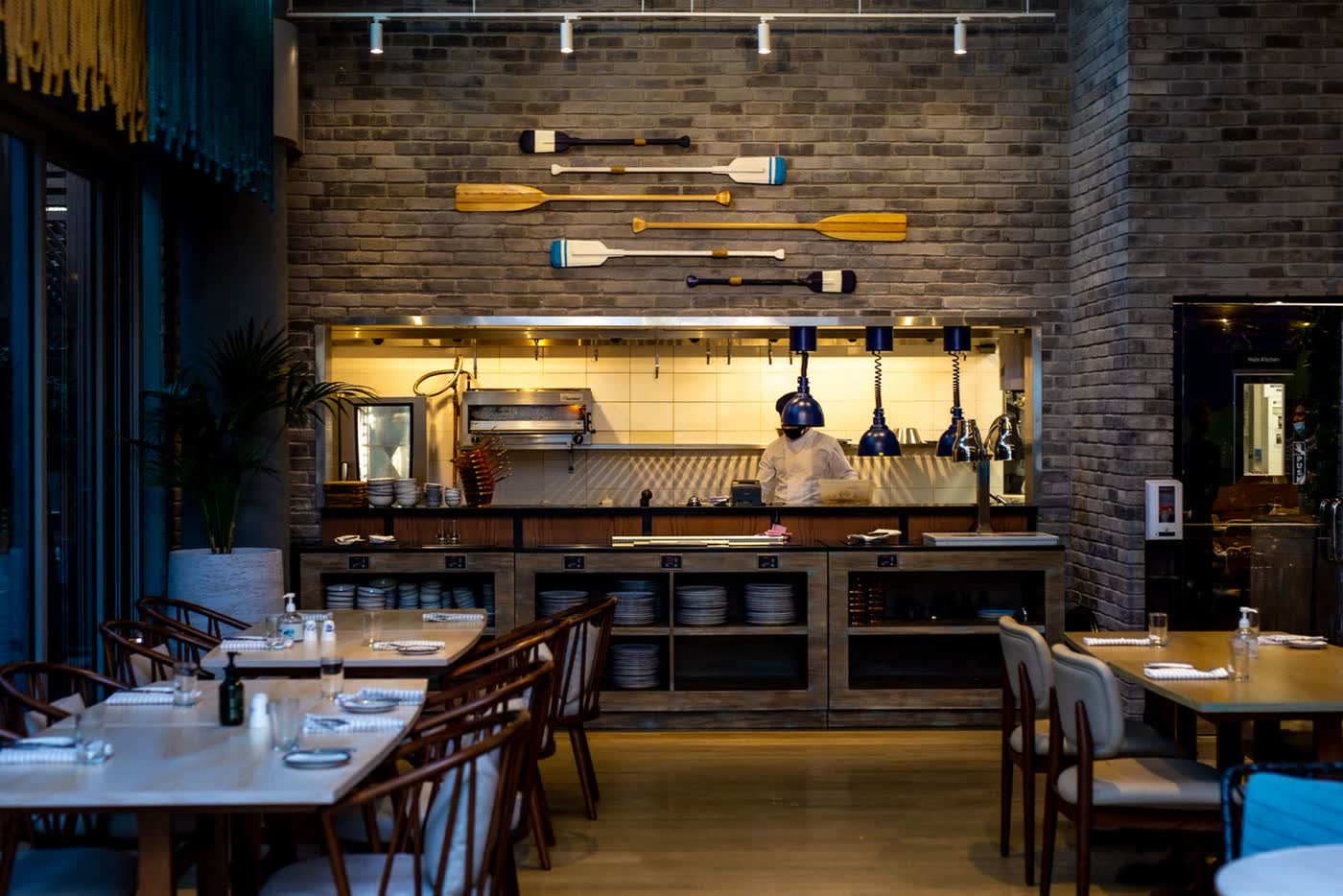
Mordor’s model gives full-service restaurants the largest slice of the GCC market at 46.3 per cent in 2025, and shows independents holding 58.7 per cent of outlets. It expects chains to grow faster, at 12.8 per cent a year. Put together, the data points to a dining room economy that is crowded, award-rich and increasingly contested by chains.
Cafés and cloud kitchens are the connective tissue
The same Saudi data shows how groups are widening their nets: Burgerizzr consolidated Shovel, a specialty coffee business it acquired in the fourth quarter of 2025. Mordor projects cloud kitchens as the fastest-growing format at 13.2 per cent a year and delivery as the fastest-growing service type at 13.8 per cent. Our look at cloud kitchens and virtual brands examines how far that model can stretch.
What to watch
Three questions will sort the winners. Can chains keep margins as input costs rise? What does delivery’s growth cost in commissions and customer-acquisition spend? And will diners who once booked a table keep coming back at the old rate? The market is growing, but the growth is not shared evenly across formats.
Sources & fact-check7
- GCC Foodservice Market Size & Share Outlook to 2031Mordor Intelligence, 11 September 2026
- UAE food delivery boom: Orders rise 15% despite weaker restaurant demandKhaleej Times, 20 July 2026
- Saudi Arabia’s delivery sector up 49% to hit 118m ordersArab News, 21 April 2026
- Americana Restaurants delivers strong H1 2026 performanceZawya (Americana Restaurants press release), July 2026
- Saudi Arabia’s Fast-Food Chains in 2026: Growth Becomes a Margin ContestXtra Food Magazine, 2026
- Michelin Guide Dubai 2026: Closed restaurants retain stars as new winners emergeThe National, 7 October 2026
- Dubai named second leading gastronomy capital globally with 1,200 new restaurant licenses issued in 2024Economy Middle East, 10 April 2025
Every name, number and date in this story was checked against the sources above before publication. Spotted something wrong? Tell us — we correct errors openly. See our editorial standards.