Hagouga, Heliopolis: Egypt’s Countryside Cooking, Kept Alive in Cairo
In a white-domed restaurant off Cairo’s Suez Road, the menu follows the clay pot, the village oven and clarified butter: slow dishes from the Egyptian countryside, served in the capital.
Egyptian country cooking rewards patience. Rice is left in the oven with milk until it turns golden, a duck is browned in clarified butter, and a clay pot is given the hours that a faster kitchen would not spare. In Heliopolis, one Cairo restaurant has built its whole identity on that rhythm: Hagouga.
The restaurant stands on El Saaqa Street, beside the Rocket Garden, where the Sheraton turn-off leaves Suez Road. A 2022 Cairo360 guide to Egyptian food gives that location, and Hagouga’s own website describes it in slightly different words, as the Masaken Sheraton turn-off from El Thawra Street. The site pictures the place simply: white domes, palms and strings of lights, with a pigeon tower among them.
A menu laid out like a village table
Hagouga’s English menu is organised by the headings of a rural kitchen rather than by the usual run of starters and mains. There is a charcoal grill, a section of village tagines, a village oven, fatta and rice, homemade mahshi, and a chapter given over to pigeon and duck. Soups, salads, sides and “Hajja’s Sweets” complete the list.
Outside coverage tends to start with the grill. Cairo360 picked out kebab, kebda, stuffed pigeon and rice-stuffed vine leaves, and called the grilled meats especially worth trying. The clay pots tell a quieter story: meat slow-cooked with plenty of onion, tender meat and okra in tomato sauce, smoky freekeh with meat, oxtail cooked with onion.
Four dishes, four kinds of patience
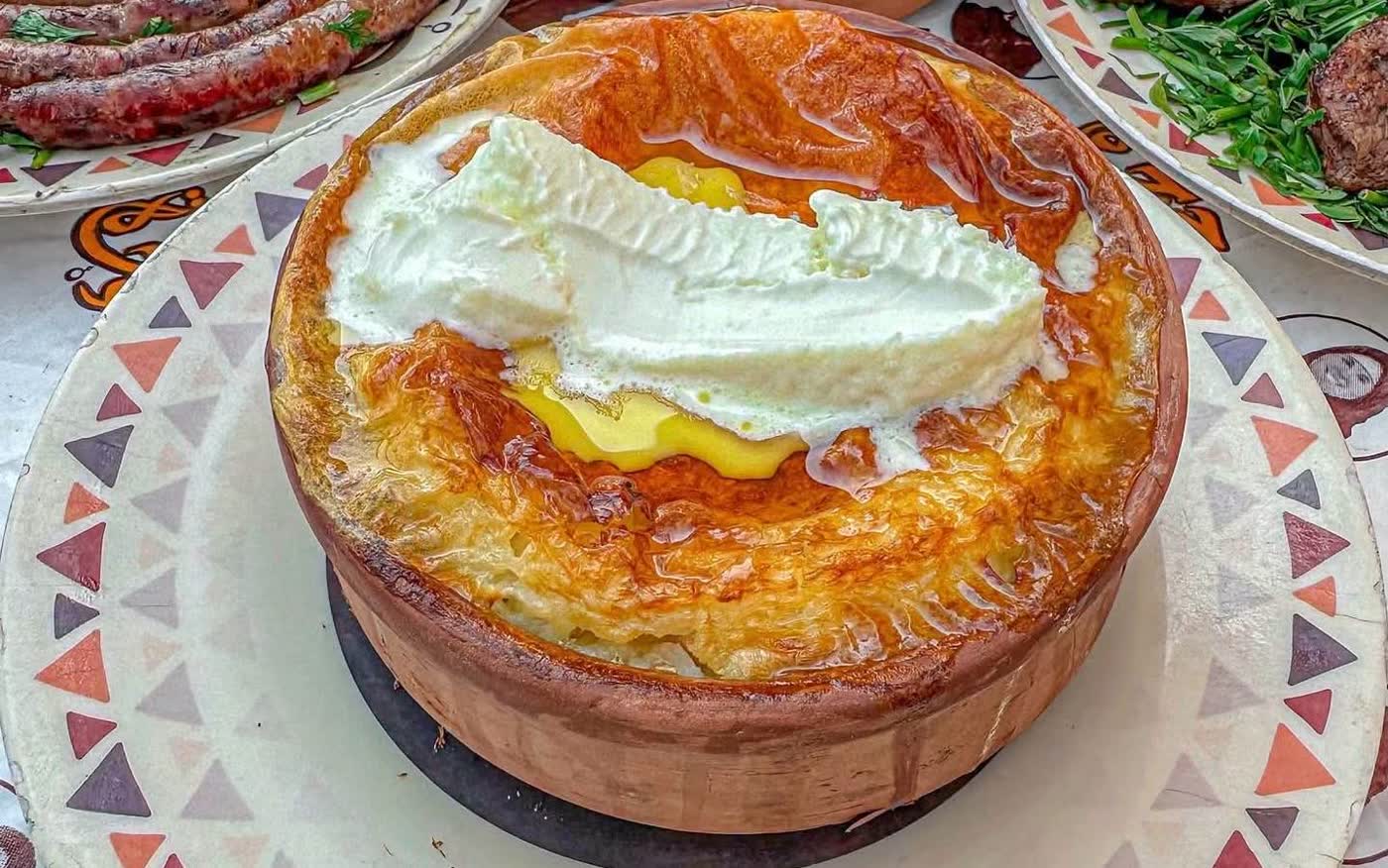
Roz moammar. Hagouga lists it as oven-baked rice pudding with country cream: rice slow-baked in milk until golden. It comes to the table in a clay pot, the top browned to a blistered crust, with cream spooned over it.
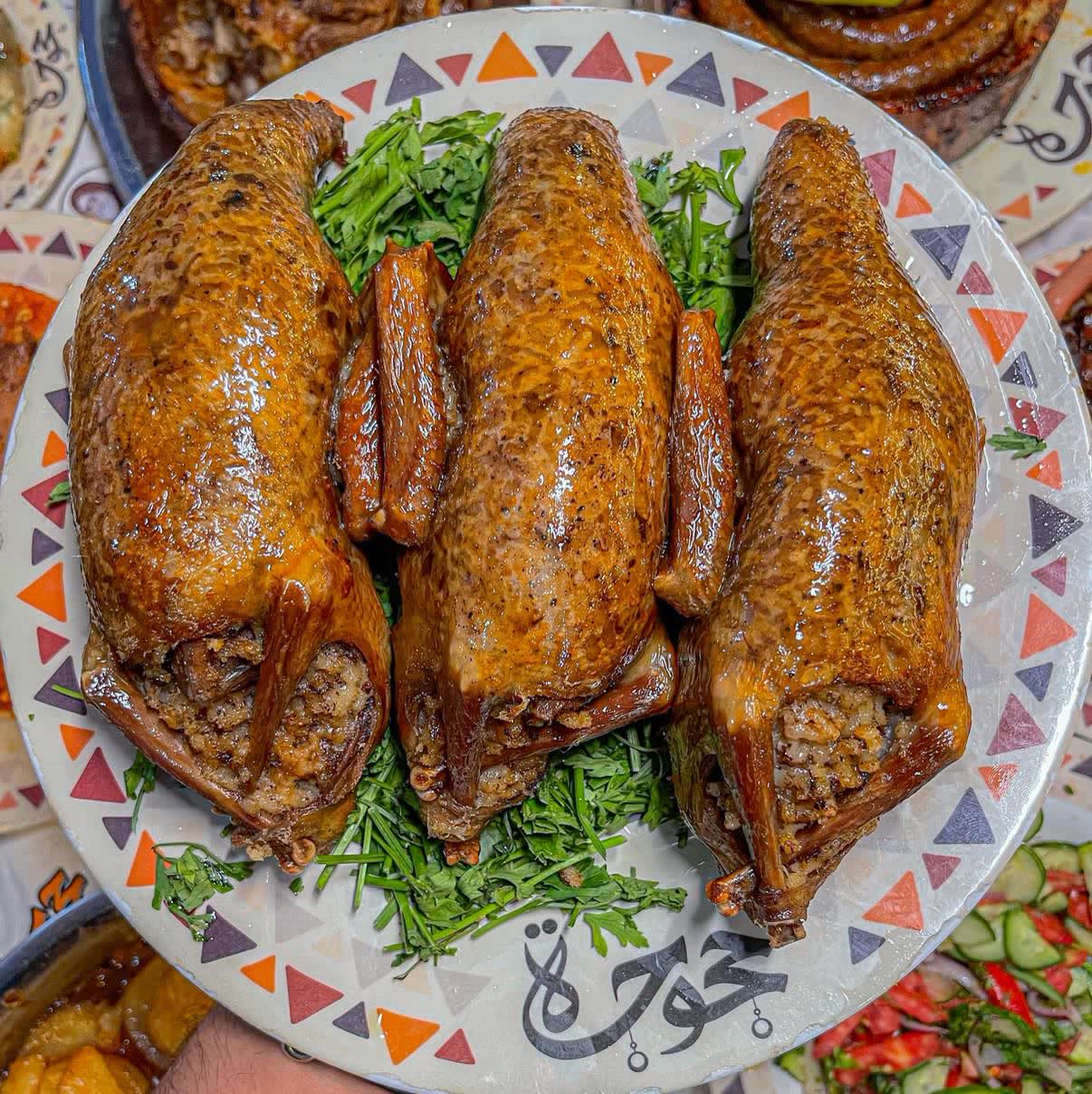
Stuffed pigeon. The menu describes a whole pigeon stuffed with seasoned rice and roasted until golden. A separate clay-pot dish, named for the pigeon tower, pairs the bird with butter rice and mazalika, the pigeon’s livers and gizzards. Hamam mahshi is a long-standing Egyptian dish, usually made with rice or freekeh, and it is often associated with hospitality and celebrations.
Roqaq with duck. Roqaq are thin sheets of country pastry. At Hagouga the roqaq tray is baked in layers with boneless duck until golden, while a plainer tray layers the pastry with minced meat and bakes it in milk and broth. Duck appears elsewhere on the menu, too: half a duck, browned in the oven with clarified butter “the old Egyptian way”, as the menu puts it, served with vine leaves or with rice and molokhia.
Molokhia. The menu describes finely chopped jute leaves cooked in broth, finished with garlic and coriander sizzling in country ghee. Many Egyptians regard molokhia as a national dish, alongside ful medames and kushari, and the garlic and coriander are added at the end, while they are still sizzling.
Heritage here is less a slogan than a method: ghee, clay, a village oven and time.
Heritage as a daily practice
Hagouga presents its cooking as inheritance rather than reinvention. The story on its website speaks of recipes handed down from grandparents’ tables, and of a promise not to change what earlier generations perfected. It is signed “Hajja Hagouga”. That is a statement of intent, and it should be read as one. What the menu itself shows is a kitchen that leans on the techniques of rural cooking: ghee, clay, a village oven and a great deal of time.
Even the vocabulary stays in the countryside. Among the dishes are “The Omda’s Share”, a serving of premium veal, and “The Omda’s Daughter’s Wedding Rice”, rice with raisins and nuts. An omda is a village headman, and the names borrow the language of village hospitality.
For readers following the wider series, Hagouga sits alongside other kitchens that keep a regional table intact, from the floor-seated majlis rooms of Najd Village in Riyadh to the courtyard of Al Khayma in Old Dubai. Hagouga’s own site notes that it works on a walk-in basis only, first come first served, with no reservations, and that Ramadan hours are posted on its pages.
Disclosure: Hagouga and The Middle Eats share an owner.
Sources & fact-check5
- Hagouga · Egyptian Country Food: English menu, story and visit detailsHagouga (official website), 14 October 2026
- Site configuration with the venue’s map locationHagouga (official website), 14 October 2026
- Where to Get Quality Egyptian Food When You’re Too Lazy To CookCairo360, 26 November 2022
- Hamam mahshiWikipedia, 15 March 2025
- MolokhiaWikipedia, 14 October 2026
Every name, number and date in this story was checked against the sources above before publication. Spotted something wrong? Tell us — we correct errors openly. See our editorial standards.