Al Khayma, Al Fahidi: Where Desert Meets Coast in Old Dubai
A restored house, a courtyard around a tree and a Bib Gourmand: Emirati cooking at the heart of Dubai’s oldest surviving neighbourhood.
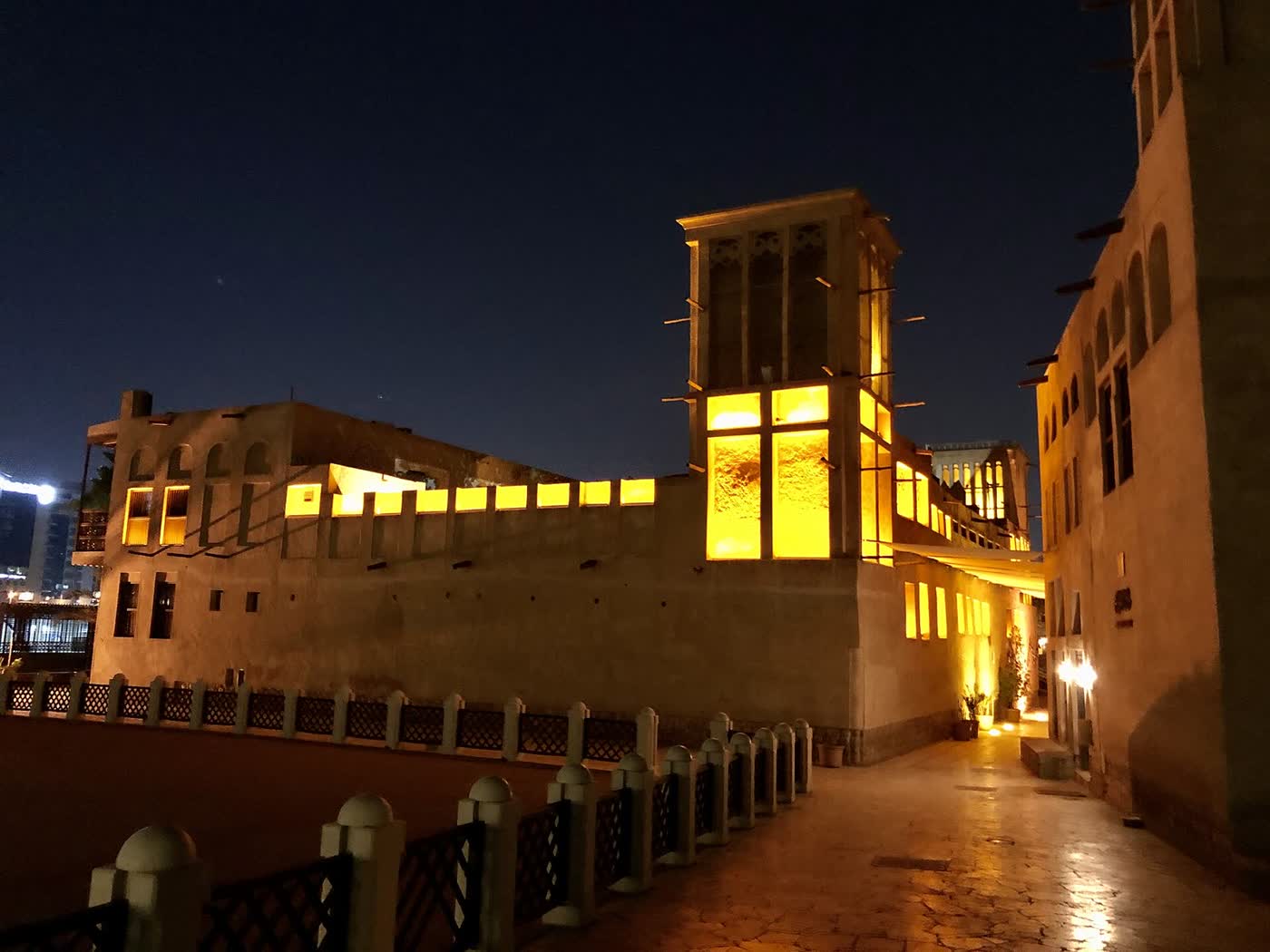
Off the narrow lanes of Al Fahidi, in a restored house, Al Khayma Heritage Restaurant centres its dining room on a covered, air-conditioned courtyard with a tree at its middle. The Michelin Guide’s inspectors describe a place that is part restaurant and part museum: staff in traditional robes, bread baked in view of diners and live music in the background.
An old neighbourhood, restored
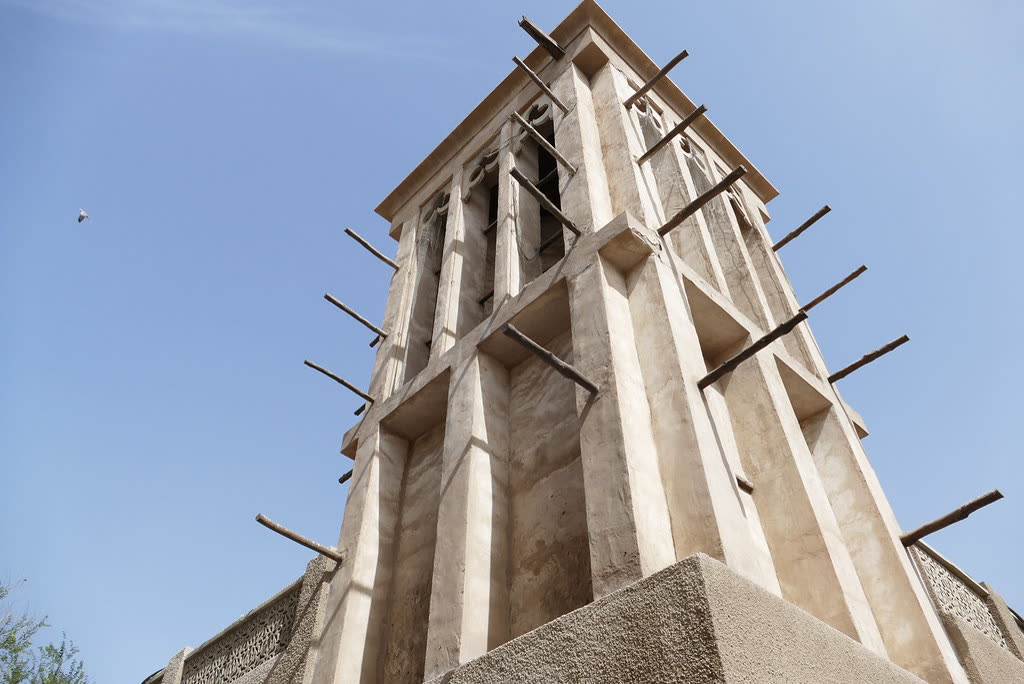
Al Fahidi Historical Neighbourhood, also known as Al Bastakiya, is one of Dubai’s oldest surviving residential areas. Gulf News dates its establishment to around 1900, near Dubai Creek, while other accounts place construction in the 1890s. It was settled by merchants from the Persian coast, many with ties to the town of Bastak, which gave the district its older name. Its best-known feature is the wind tower, or barjeel, which channelled breezes into the houses in the days before air conditioning.
The quarter fell into disrepair in the twentieth century and was partly demolished before a conservation effort and, from 2005, a Dubai Municipality restoration programme returned it to use; in 2012 it was renamed after the nearby Al Fahidi Fort, according to Gulf News. Today galleries, cafés and restaurants occupy many of the houses.
The neighbourhood has other draws for a visitor. Among them are the Sheikh Mohammed Centre for Cultural Understanding, a non-profit that aims to build cultural relationships among people in Dubai, and the Dubai Coffee Museum, whose ground floor hosts live roasting and brewing demonstrations.
The restaurant
Al Khayma, at Villa 54-44, occupies one of those old houses. A 2023 review on the food blog live2makan describes it as established in 2020 in an old Dubai house converted into a restaurant. The Michelin Guide lists it with a Bib Gourmand, the award for good cooking at moderate prices, and it remained in the 2026 selection announced on 6 October. In 2025 it also won Michelin’s Service Award. Mohamed Galal, the area manager, told Michelin that staff greet early guests with Arabic coffee, and that his greatest reward is a diner saying the meal felt like home. Michelin also records that no alcohol is served.
Michelin’s Service Award article adds to the picture of the room: Bedouin-inspired interiors that recall early UAE homes, aged archways, leafy trees, low cushions and carved wooden furniture that encourage slow dining, with live grill stations, traditional music and storytelling as part of the service.
What is on the table
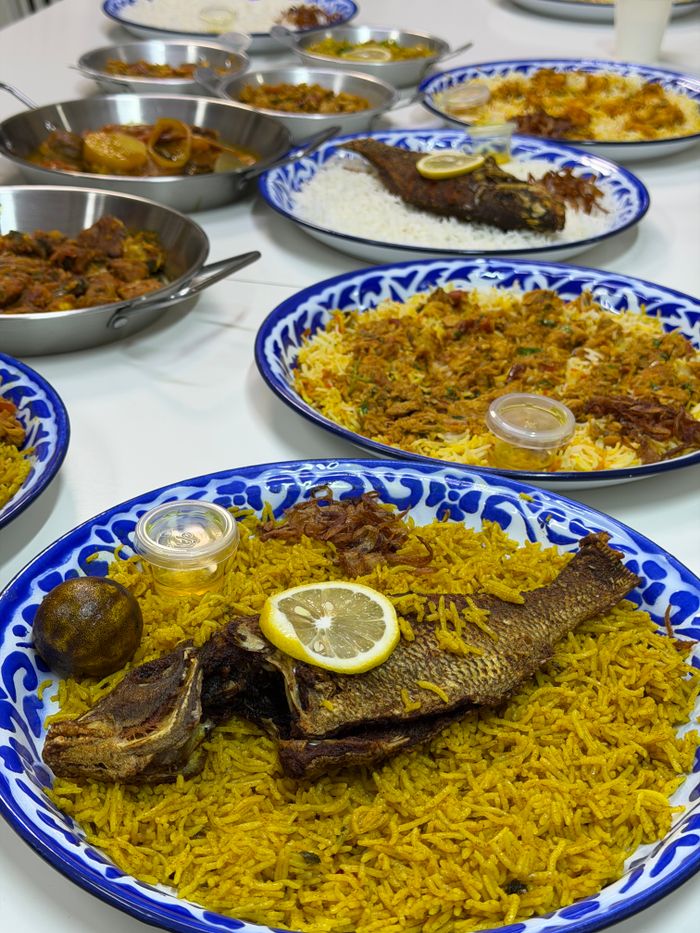
The kitchen leans on the repertoire of the Emirati home table. Michelin’s inspectors recommend a salad and the bread to start, the lamb machboos for sharing, and luqaimat and sticky date pudding to finish. Machboos is a layered rice dish with meat or seafood, slow-cooked with onion, baharat and loomi, the dried lime used across Gulf cooking. Our Emirati machboos recipe explains how it is built.
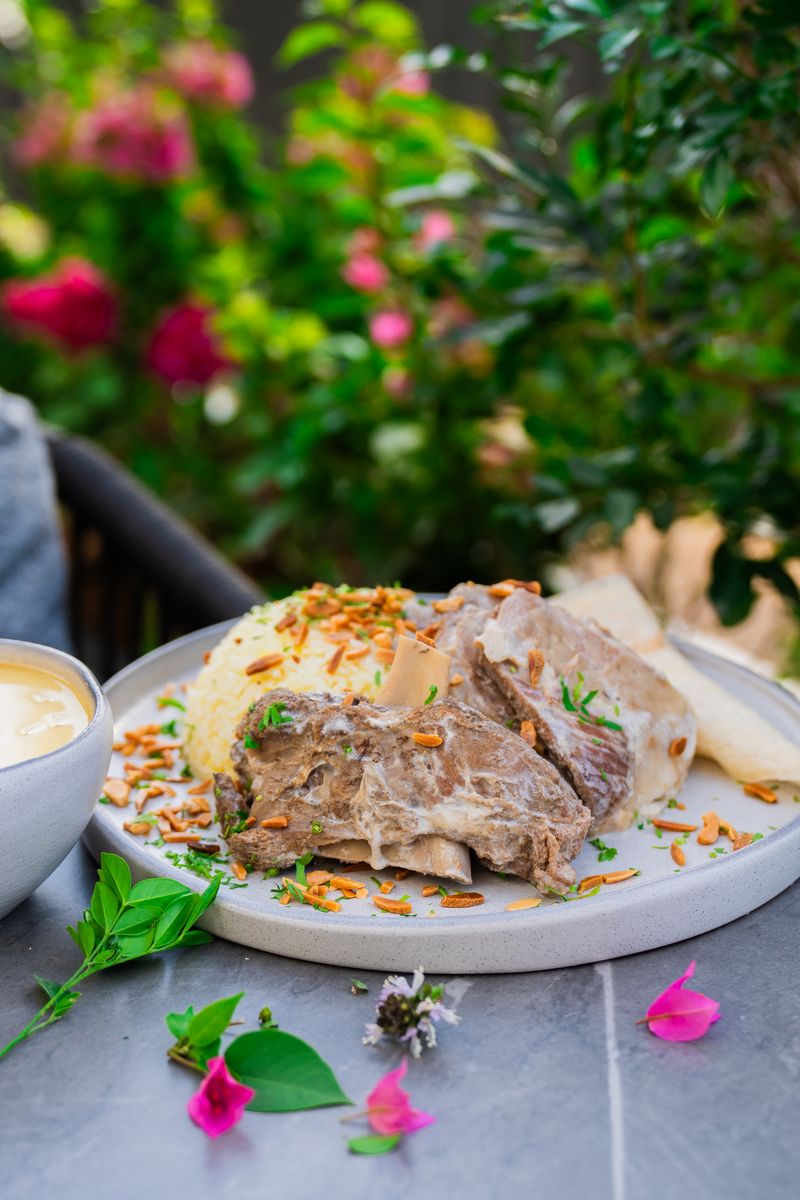
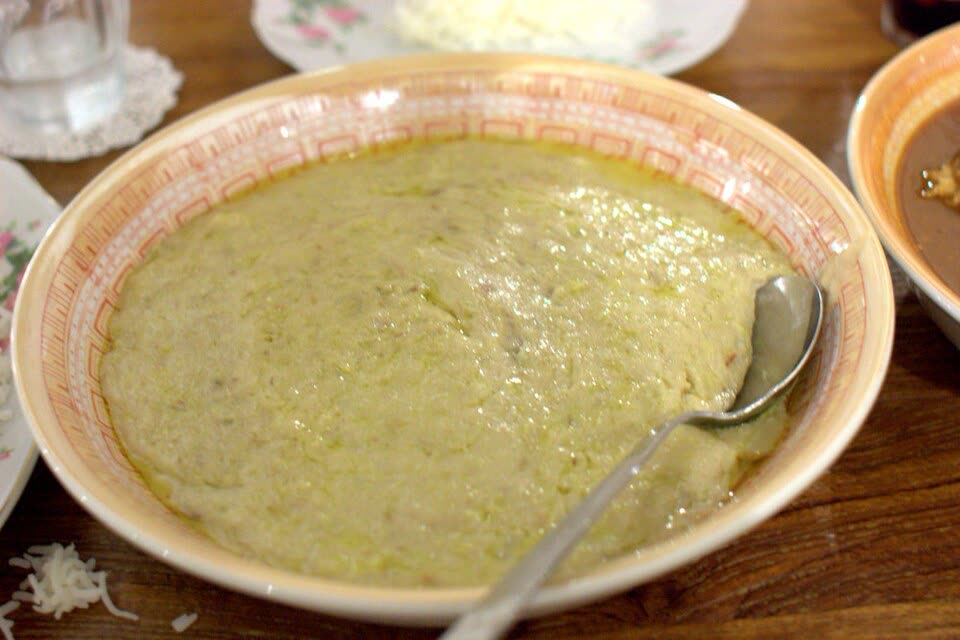
The wider menu, as described by Michelin and the live2makan reviews, includes lamb madfoon, chebab (Emirati pancakes), a lamb saloona stew served with steamed basmati rice, chickpeas spiced as dango and bread baked fresh, sometimes filled with date paste. Harees, the slow-cooked wheat dish, appeared on the menu as a lamb soup when live2makan reviewed it in 2023, so it is worth asking whether it is available. Seasoning comes from baharat and from bezar, the Emirati spice mix, which one reviewer lists as cumin, fennel, coriander, dried chillies, turmeric, black pepper and cinnamon; the rice dishes are seasoned with saffron.
Dessert is where the dates arrive: sticky date pudding and a date tart, alongside luqaimat, the fried dough balls traditionally finished with date syrup. For a recipe, see our guide to luqaimat and date syrup.
Desert and coast
The menu shows both halves of the Emirati table. The Bedouin-inspired interior, the lamb rice dishes and the grills belong to the desert; the seafood platters and fish dishes belong to the Creek-side coast. That mix is also why the courtyard setting matters. A traditional house, a wind tower down the lane and a kitchen that cooks from the old repertoire give visitors a way to taste Dubai’s past in one of its oldest surviving neighbourhoods.
Sources & fact-check8
- Al Khayma Heritage Restaurant, DubaiMICHELIN Guide
- Al Khayma Heritage Restaurant on its Service AwardMICHELIN Guide, 13 August 2025
- Michelin Guide Dubai 2026: Closed restaurants retain stars as new winners emergeThe National, 7 October 2026
- Al Khayma, Dubailive2makan, 24 February 2023
- Hospitality in an Emirati homelive2makan, 19 May 2023
- Uncovering secrets of Al Bastakiya’s windtower housesGulf News, 4 July 2022
- Al Bastakiya (Al Fahidi Historical Neighbourhood)Wikipedia
- Al-Fahidi Historical NeighborhoodAfar
Every name, number and date in this story was checked against the sources above before publication. Spotted something wrong? Tell us — we correct errors openly. See our editorial standards.