Luqaimat and Date Syrup: A Gulf Dessert with Staying Power
Crisp outside, soft within: from the traditional table to café culture. A saffron-scented luqaimat recipe with date syrup, for six.
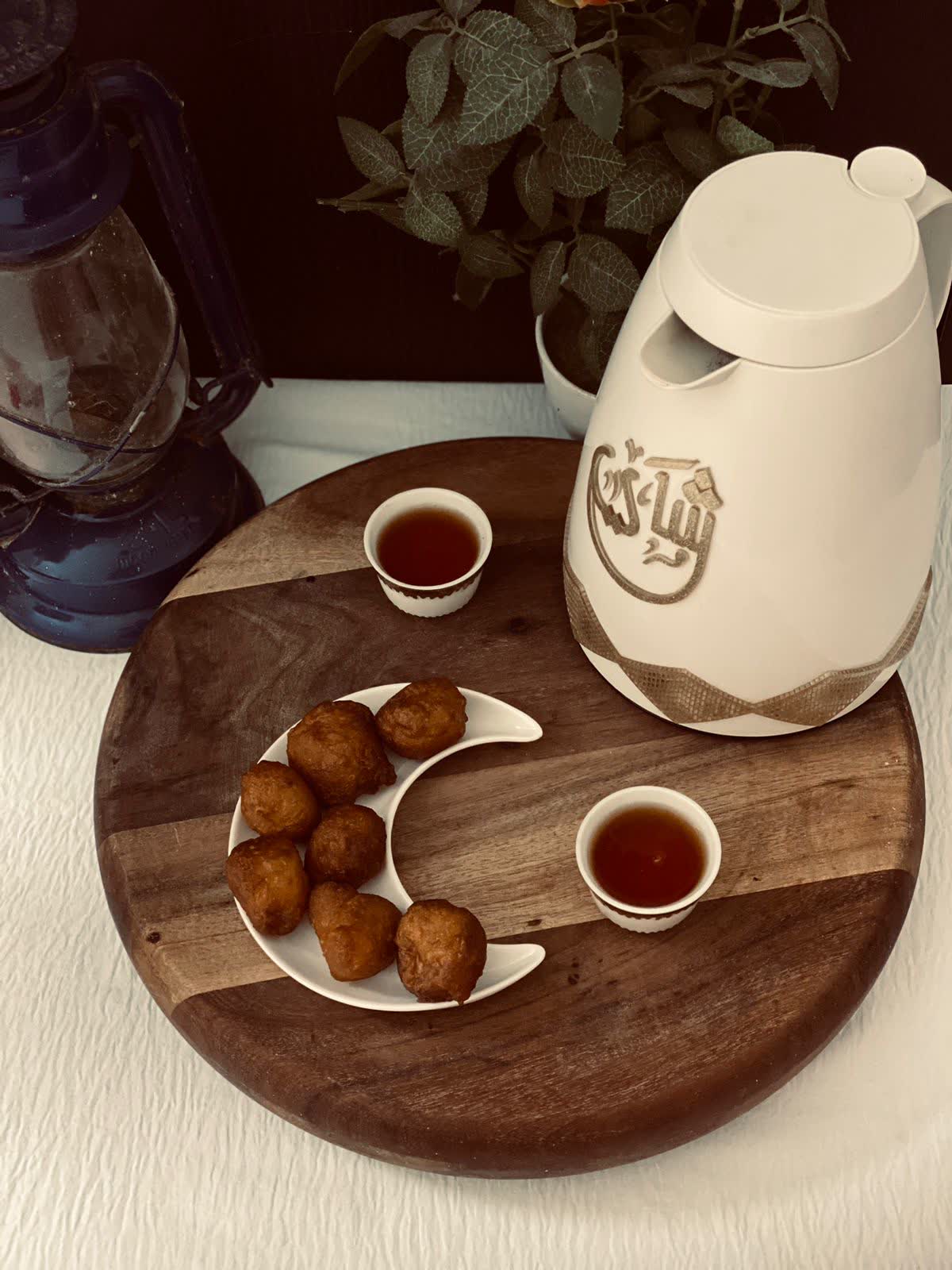
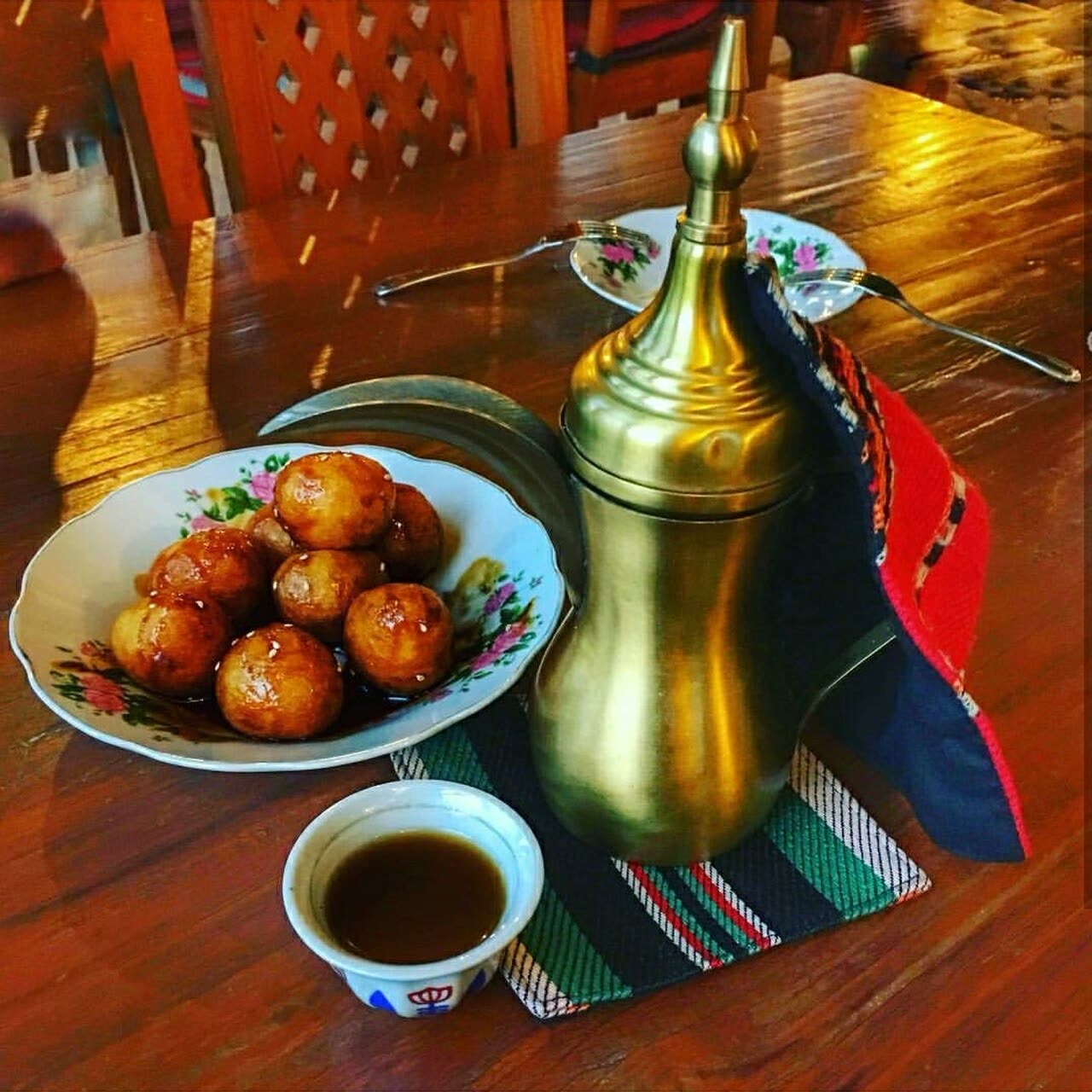
Luqaimat means “small bites”, and the name is accurate: these are bite-sized balls of yeasted dough, fried until the outside is crisp and the inside soft and airy, then finished with date syrup and sesame. In the Gulf the syrup goes by the name dibs; honey is the usual alternative. Al Fanar, the Dubai restaurant known for Emirati cooking, describes a thin, crisp shell around an almost hollow centre, served warm in a shared bowl and eaten with the fingers.
Luqaimat are a celebration dessert. Al Fanar lists Ramadan iftar, Eid, weddings, family gatherings and UAE National Day among the occasions for them, and Michelin’s feature on the dish pairs them with gahwa, the Emirati coffee, whose bitterness balances the sweetness. Their history is only partly known. Michelin notes that the origin is unclear: some link luqaimat to Saudi Arabia, while others trace them to 13th-century Iraq, where similar puffed sweets called luqmat al-qadi, the “judge’s morsels”, are said to have been served to sway judges. The National adds that similar dumplings carry other names across the region, including zalabia in Egypt and aweimat in Lebanon and Syria.
The recipe below follows the method common to the Gulf recipes we compared: a loose, yeasted batter, cardamom and saffron for fragrance, a spoonful of yoghurt, as in the Table Tales recipe published by The National, a little cornflour alongside the flour, and a hot-oil fry in small batches. Quantities are drawn from recipes by Muna Kenny of Munaty Cooking, from the Table Tales collection and from Chef Sajjad Hussain in Gulf News, and The National’s version supplies the oil temperature. The method is written in our own words.
Two things matter most. First, let the batter rise fully, until it is bubbly, because the airiness comes from fermentation. Second, watch the oil: too hot, and the outside browns before the centre cooks; too cool, and the dumplings turn greasy.
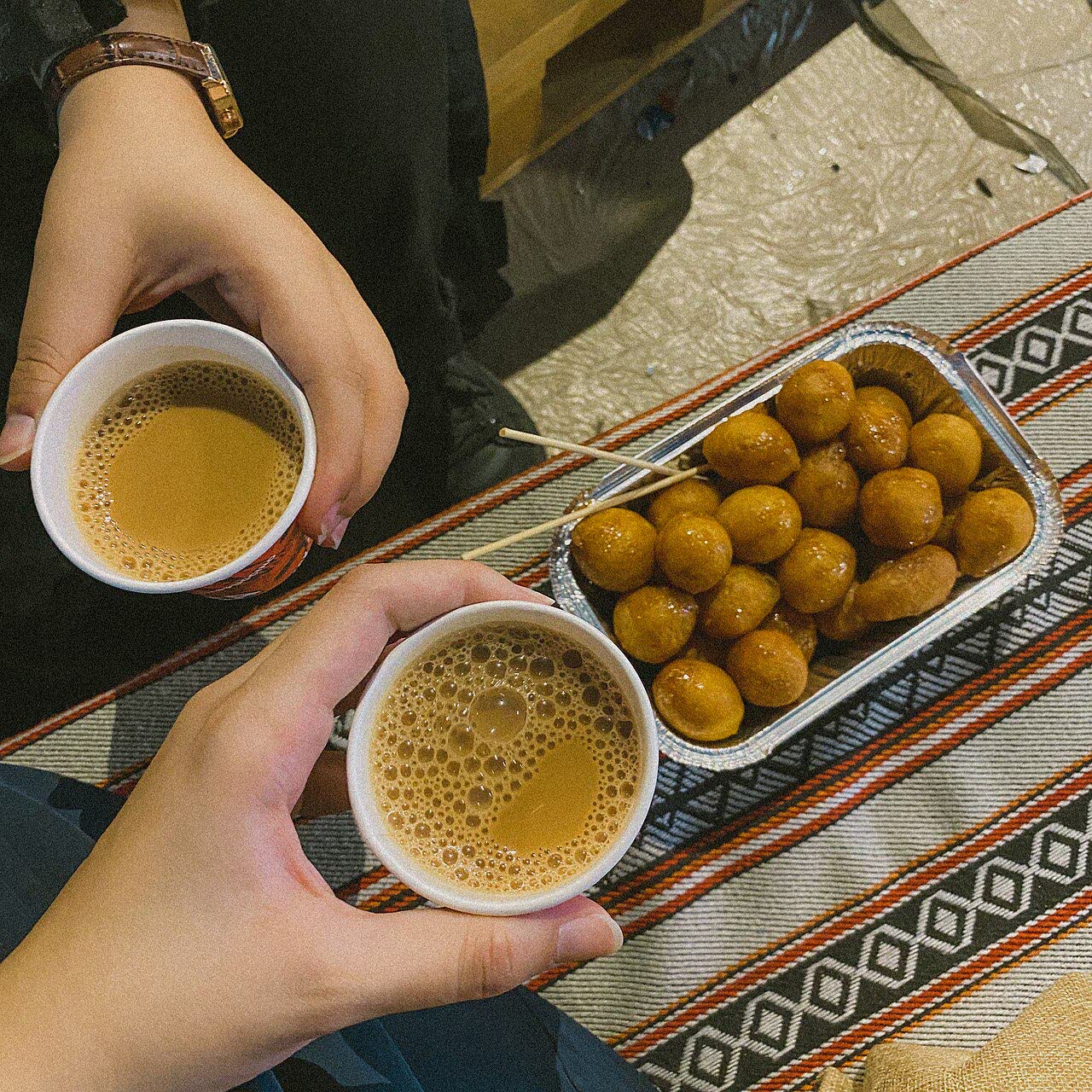
For a restaurant version, see our feature on Al Khayma, where Michelin’s inspectors recommend luqaimat to finish the meal. The same crunch-and-sweetness idea reappears in the new wave of desserts we cover in Kunafa Reinvented.
Luqaimat and Date Syrup
Ingredients
For the batter
To fry and serve
Method
- 1
Steep the saffron in 1 tablespoon of hot water and leave it for about .
- 2
Whisk the flour, cornflour, sugar, yeast, cardamom and salt together in a large bowl.
- 3
Add the saffron water, the yoghurt and 300 ml of warm water. Beat by hand or with a whisk for until the batter is smooth, glossy and elastic. It should be a thick, pourable batter, slightly thicker than pancake batter; add water a tablespoon at a time if it is stiff.
- 4
Cover the bowl and leave it in a warm place for about , until the batter has doubled and is covered in bubbles.
- 5
Pour the oil into a deep, heavy pan to a depth of about 6 cm and heat it to roughly 165 to 170°C. Test with a small spoonful of batter: it should sizzle and rise steadily; if it shoots to the surface and browns at once, lower the heat.
- 6
Stir the batter once, gently, so you do not knock out all the air. Dip a spoon into the hot oil, scoop up a heaped teaspoon of batter and use a second oiled spoon to push it off into the pan.
- 7
Fry in batches of 8 to 10 without crowding, turning the pieces with a slotted spoon, for until deep golden and puffed. Let the oil come back to temperature between batches.
- 8
Lift the luqaimat out and drain them briefly on kitchen paper.
- 9
Warm the date syrup gently in a small pan for without letting it simmer.
- 10
Toss the hot luqaimat in the warm syrup, or drizzle it over, scatter with sesame seeds and serve at once, with Arabic coffee or tea.
Cook’s notes
- Serve straight away. Luqaimat are at their best fresh and warm, when the outside is crisp and the inside soft and airy.
- Honey or a sugar syrup can replace the date syrup, as several Gulf recipes suggest.
- Variations: a tablespoon of rose water in the saffron water (as in the Table Tales recipe), a few fennel seeds in the batter (as in Chef Sajjad Hussain’s recipe for Gulf News), or, as Al Fanar does on its menu, chocolate and pistachio variations.
- If the outsides brown before the centres cook, the oil is too hot; if the pieces turn out greasy, it is too cool.
Sources & fact-check6
- Luqaimat recipe (crispy Emirati sweet dumplings)Munaty Cooking, 23 June 2026
- Luqamaat: fried dumplings with date syrup (from the cookbook Table Tales)Taras Multicultural Table
- Guide to making the traditional Emirati sweet, luqaimat (recipe by Chef Sajjad Hussain)Gulf News, 25 August 2021
- Ramadan recipe: luqaimat sweet dumplings (Nisreen Bajis, with Table Tales)The National, 15 April 2021
- Luqaimat: the iconic Emirati dessertMICHELIN Guide, 20 February 2024
- What is luqaimat? The Emirati dessertAl Fanar
Every name, number and date in this story was checked against the sources above before publication. Spotted something wrong? Tell us — we correct errors openly. See our editorial standards.