Sana’a’s Table: Zurbian, Mulawah and the Bubbling Pot of Saltah
Yemen’s national dish arrives in a stone pot, still boiling and capped with a froth of fenugreek. Around it sit layered bread, a southern rice dish and a lunch that is the main event of the day.
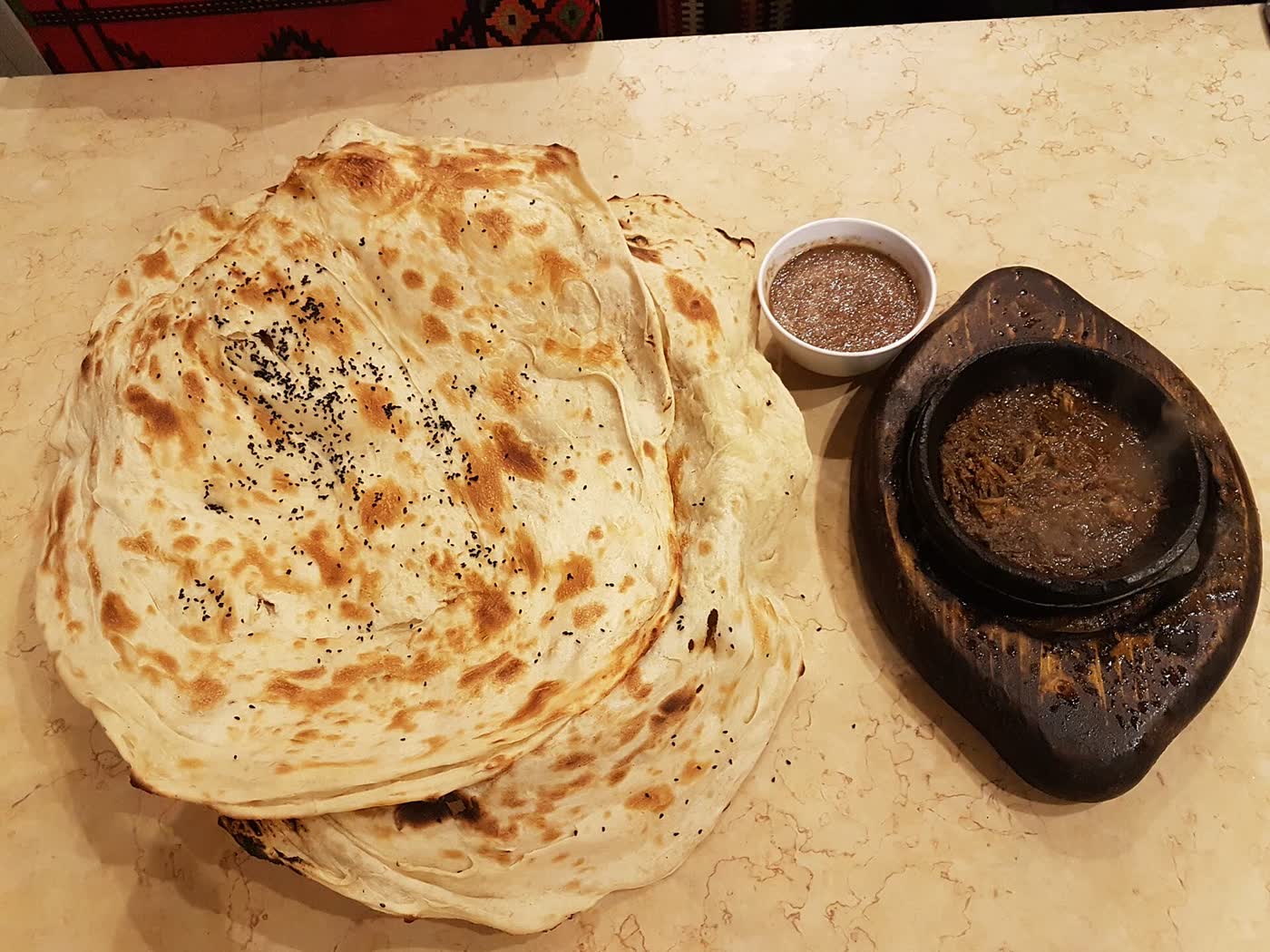
The pot arrives while it is still boiling. Saltah, Yemen’s national dish, is served in a pot of stone or earthenware, and it is capped with a pale froth of fenugreek that sits on top of the stew rather than being stirred into it. The tradition is to eat it at once, tearing off bread and dipping into the heat. The Arabic name is said to come from a verb meaning to eat and lick eagerly, which describes the meal well.
Because it is hard to confirm which restaurants in Sana’a are operating at any given moment, this story follows the table instead. The dishes below are the ones guides and food writers associate with the Yemeni capital and its north, and they are best read as a map of a lunchtime meal rather than a list of addresses.
The pot that arrives bubbling
Saltah has a brown meat stew called maraq as its base. In the account of the Yemeni language teacher Ibnulyemen, writing for Transparent Language, that stew is a thick beef stock cooked with bones and seasoned with black pepper, cumin and spring onion. On top go a dollop of fenugreek froth and sahawiq, a sauce of tomatoes, garlic, green chilli and salt traditionally crushed on a flat stone. Rice, potatoes, egg and vegetables are common additions.
The serving vessel matters. Ibnulyemen says it is a clay or stone pot, a hardhah or maqlaa, and that saltah served in any other vessel is not really saltah by traditional standards. Marhaba’s food guide describes saltah as popular in the north, especially in Sana’a, served hot with bread as part of a lunch with other dishes. A sister dish, fahsa, is a stew of veal or lamb cooked at a high heat in a stone pot and served boiling. World Travel Guide describes fahsa as similar to saltah but with more meat.
Hulba, the froth that makes the dish
Hulba, the fenugreek froth, is the signature of saltah. Wikipedia describes it as a condiment of ground fenugreek seeds that expands when mixed with water and turns light and frothy when whisked, and says it is eaten almost daily in Yemen. In Ibnulyemen’s description, fenugreek flour is soaked for two to three hours, drained, then beaten by hand for up to five minutes until it turns white and is mixed with pounded leek. It goes on top of the pot without stirring.
The froth sits on the stew; it is not stirred in.
Wikipedia adds a historical note: in the Ottoman Empire, saltah was a charitable food made from leftovers donated by wealthy households or mosques. That is one account of the dish’s past, and it points to humble beginnings.
Mulawah, the bread that does the work
Bread is the spoon. Mulawah, also known as rashush, is a layered Yemeni flatbread baked in a clay tannur, its dough folded into layers with butter or ghee. It is often eaten at weekend breakfasts with ghee and honey, and Marhaba, which spells it malawach, says it is traditionally served with hard-boiled eggs, tomatoes and a spicy zhug. Wikipedia’s saltah article names mulawah as the flatbread used to scoop up the stew.
Mealtimes follow the same logic. Wikipedia’s survey of Yemeni cuisine says lunch, not dinner, is the main meal, and that most meat, poultry and grain dishes are eaten then. Meals are often eaten sitting on the floor, and World Travel Guide notes that outside upmarket hotels they are usually shared, with crisp flatbread used to scoop up food with the right hand.
Zurbian, a southern guest at the northern table
Zurbian belongs to a different part of the country. Wikipedia describes it as a rice dish of chicken or lamb with potatoes and basmati rice, seasoned and coloured with a spice mix and saffron, and nicknamed the Yemeni biryani; it says the dish originates in southern Yemen. Marhaba places it in Aden. It is served at weddings, the two Eids and Ramadan meals, garnished with parsley and sliced almonds.
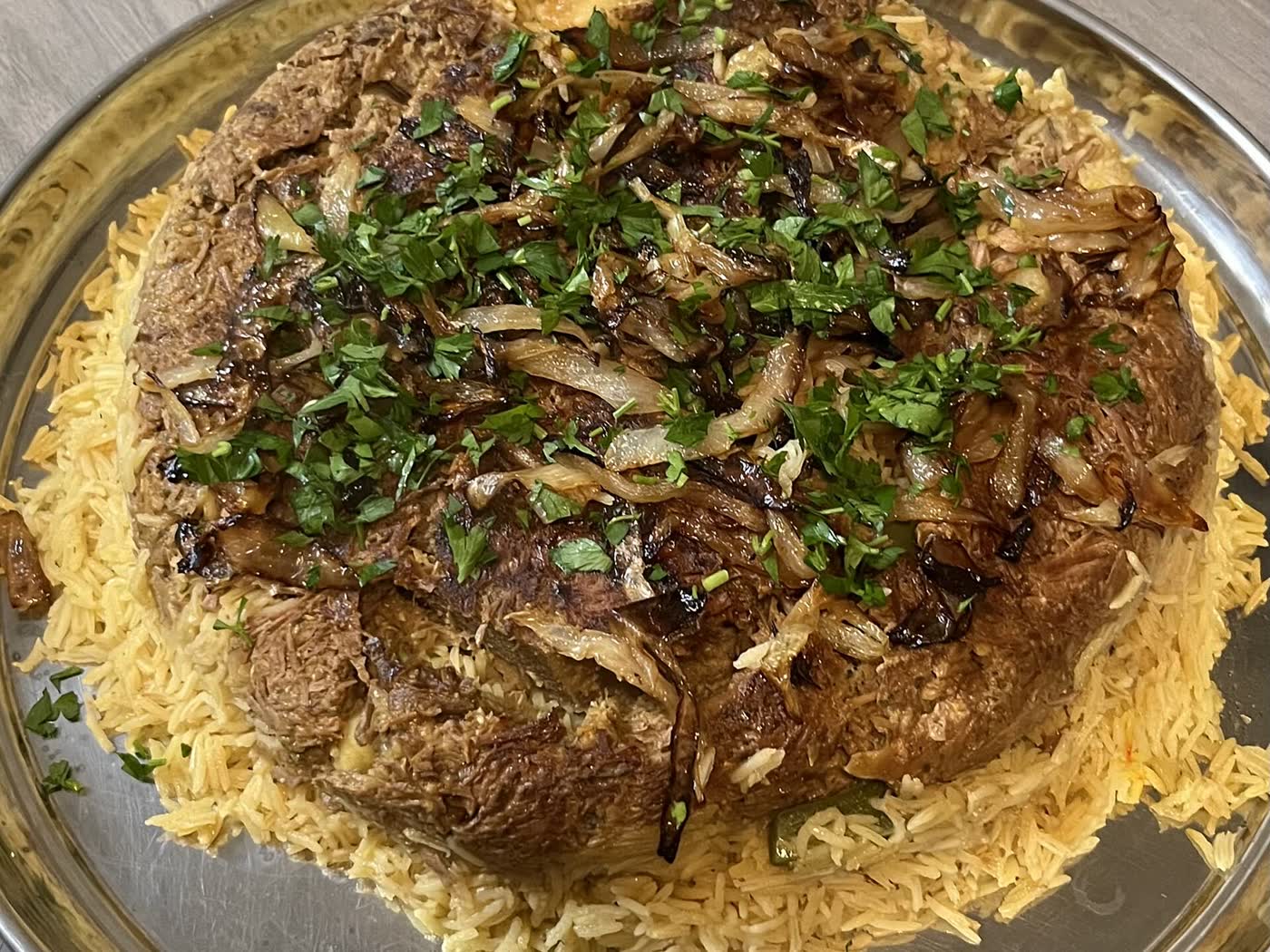
That is not to say zurbian is absent from Sana’a. TravelSetu’s Sana’a food guide, an undated tourist listing, gives zurbian and mulawah as the famous dishes of an “Al-Shaibani Modern Restaurant” on Zubairi Street. That listing gives no opening date or current status, and nothing found for this story shows whether the restaurant is operating today, so it is mentioned only as a name that appears in guides.
A city older than its menus
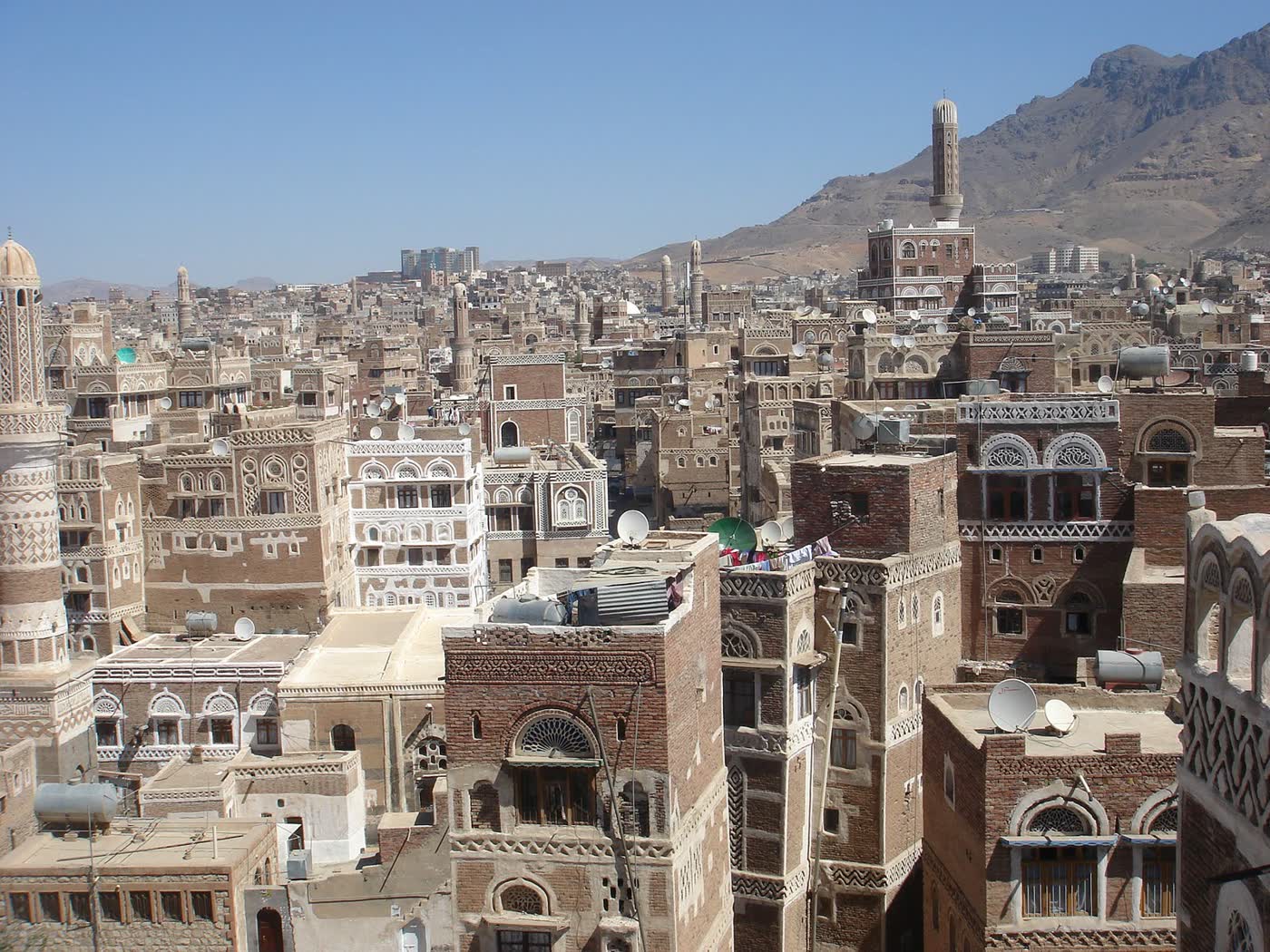
The setting for all of this is the Old City of Sana’a, a UNESCO World Heritage Site since 1986. Wikipedia’s account says the walled city has been inhabited for more than 2,500 years and holds about 6,500 houses, more than 100 mosques and 12 hammams, with a salt market where vendors sell bread, spices and raisins. It is a reminder that Yemeni food is as much a part of a built and trading landscape as of a recipe book.
Read that way, saltah is more than a stew. It is a dish with a ritual of serving, a particular froth, a bread that doubles as cutlery and an hour of the day when it is eaten. For readers following this series, it offers a useful contrast with the communal rice platters of the Gulf, such as those at Najd Village in Riyadh.
Sources & fact-check10
- SaltahWikipedia, 14 October 2026
- Yemeni cuisineWikipedia, 14 October 2026
- ZorbianWikipedia, 14 October 2026
- Khubz mulawahWikipedia, 14 October 2026
- HilbehWikipedia, 14 October 2026
- Old City of Sana’aWikipedia, 14 October 2026
- Marhaba Food File #21: Yemeni CuisineMarhaba (Qatar), 8 May 2023
- saltah سَلْتَة: Yemen’s National DishTransparent Language (Arabic blog), 30 April 2017
- Yemen: Food and DrinkWorld Travel Guide, 14 October 2026
- Food in Sana’aTravelSetu, 14 October 2026
Every name, number and date in this story was checked against the sources above before publication. Spotted something wrong? Tell us — we correct errors openly. See our editorial standards.