Saudi Kabsa: One Dish, Many Regional Expressions
Najdi and Hijazi kabsa, compared by spice, protein and rice, with a lamb kabsa to cook at home.
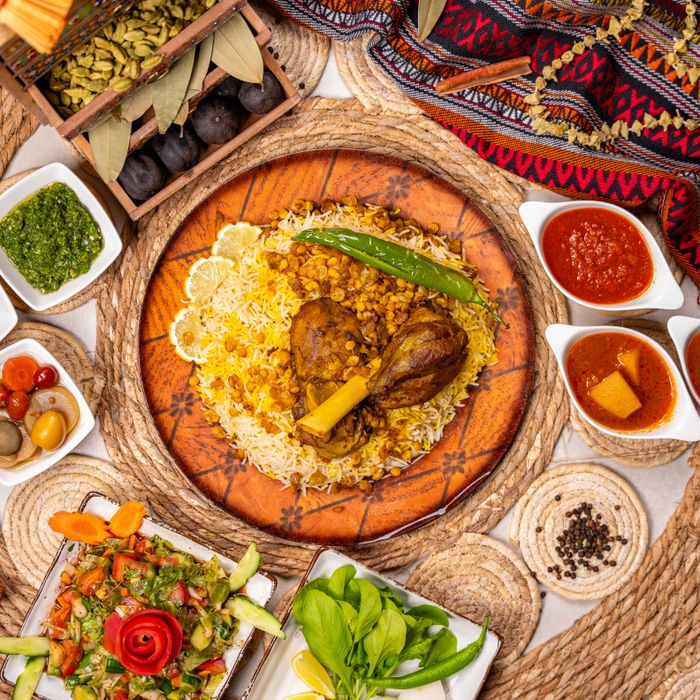
Kabsa is the rice-and-meat dish most closely associated with Saudi Arabia, and it is cooked across the Gulf, where Wikipedia notes it is commonly regarded as a national dish. The name comes from the Arabic root k-b-s, meaning to press, a reference to everything cooking together in one pot. Its origins are contested: theories range from Bedouin camp cooking to the Yemeni dish of mandi.
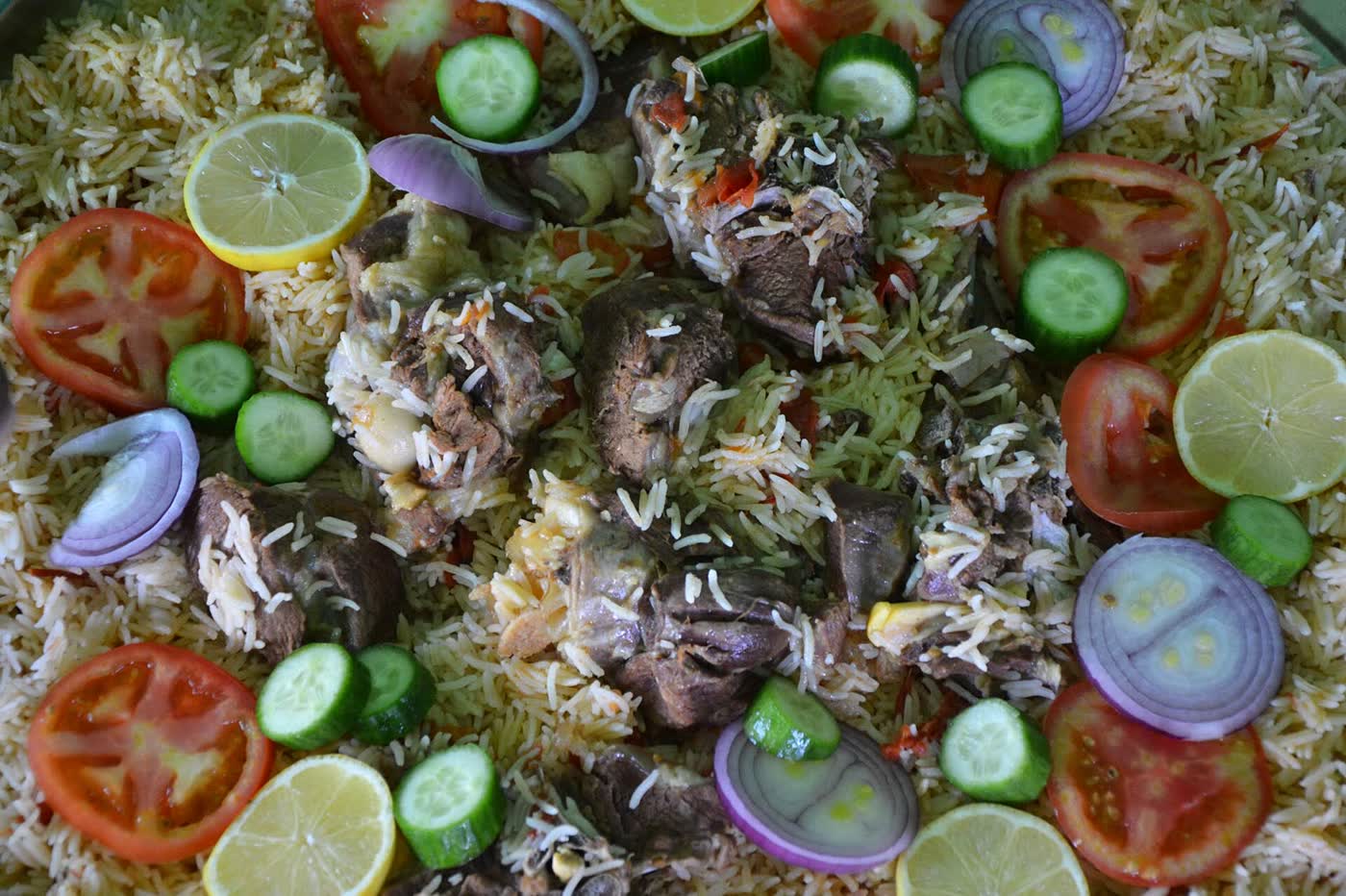
The method is shared. Meat is browned, then simmered with onion, tomato and spices; the stock cooks the soaked rice, which is almost always long-grain basmati. Black limes, cardamom, cinnamon, cloves, nutmeg, bay and saffron appear in most versions. What changes from region to region is the expression: the spices, the meat and the way the rice is cooked.
A regional guide from House of Saud describes the Najdi kabsa of Riyadh and central Saudi Arabia as heavier on spices, with drier rice and typically lamb or camel, and calls it the most traditional version. The Hijazi kabsa of Jeddah and Mecca, shaped by centuries of pilgrimage-route trade, has more tomatoes and fresh herbs and slightly more sauce. The Eastern Province leans on saffron and dried limes, and the south adds local honey and butter. Sources disagree on how spiced the Najdi version really is: Halaltravelpal describes Najdi cooking as meat-first, recalling a dish that took six hours to cook but used only four or five spices, so that the meat speaks for itself.
The recipe below is Najdi-leaning, with lamb, a drier rice and a spice base kept in the stock, and the tips show how to tilt it towards the Hijazi style. To taste Najdi kabsa cooked professionally, see our feature on Najd Village in Riyadh.
Saudi Kabsa
Ingredients
For the lamb
For the rice
For the tomato and herb sauce
To finish
Method
- 1
Heat the ghee in a large, heavy pot over medium-high heat and brown the lamb in batches until deep golden on all sides. Lift the pieces out and set them aside.
- 2
In the same pot, fry the onions until soft and golden, then add the garlic for a minute. Add the cardamom, cinnamon, cloves, bay leaves, peppercorns, coriander seeds, cumin and nutmeg and stir for a minute until fragrant.
- 3
Stir in the tomato paste, then add the chopped tomatoes and cook, stirring, until they break down into a thick sauce and the ghee begins to separate at the edges.
- 4
Return the lamb to the pot with the black lime and salt, and pour in the boiling water. Bring to the boil, skim off any foam, then cover and simmer gently for to , until the meat is very tender and nearly falling off the bone.
- 5
Lift the lamb out onto a plate and keep it warm. Strain the stock through a fine sieve into a jug, discarding the whole spices, and measure out 900 ml. Season it, taste, and wipe out the pot.
- 6
Heat the tablespoon of ghee in the clean pot and fry the grated carrot for . Add the drained rice and stir for a minute so the grains are coated.
- 7
Pour in the 900 ml of hot stock and the saffron water, if using. Bring to the boil, taste and adjust the salt, then reduce the heat to the lowest setting, cover tightly and cook for without lifting the lid.
- 8
Take the pot off the heat and leave the rice to rest, covered, for so the steam finishes the cooking.
- 9
While the rice rests, blend the quartered tomatoes, chilli, mint and coriander with a pinch of salt into a smooth, loose sauce, and set it aside.
- 10
Fry the almonds and pine nuts or cashews in the butter until golden, then add the raisins for 30 seconds until they plump. Tip everything onto a plate.
- 11
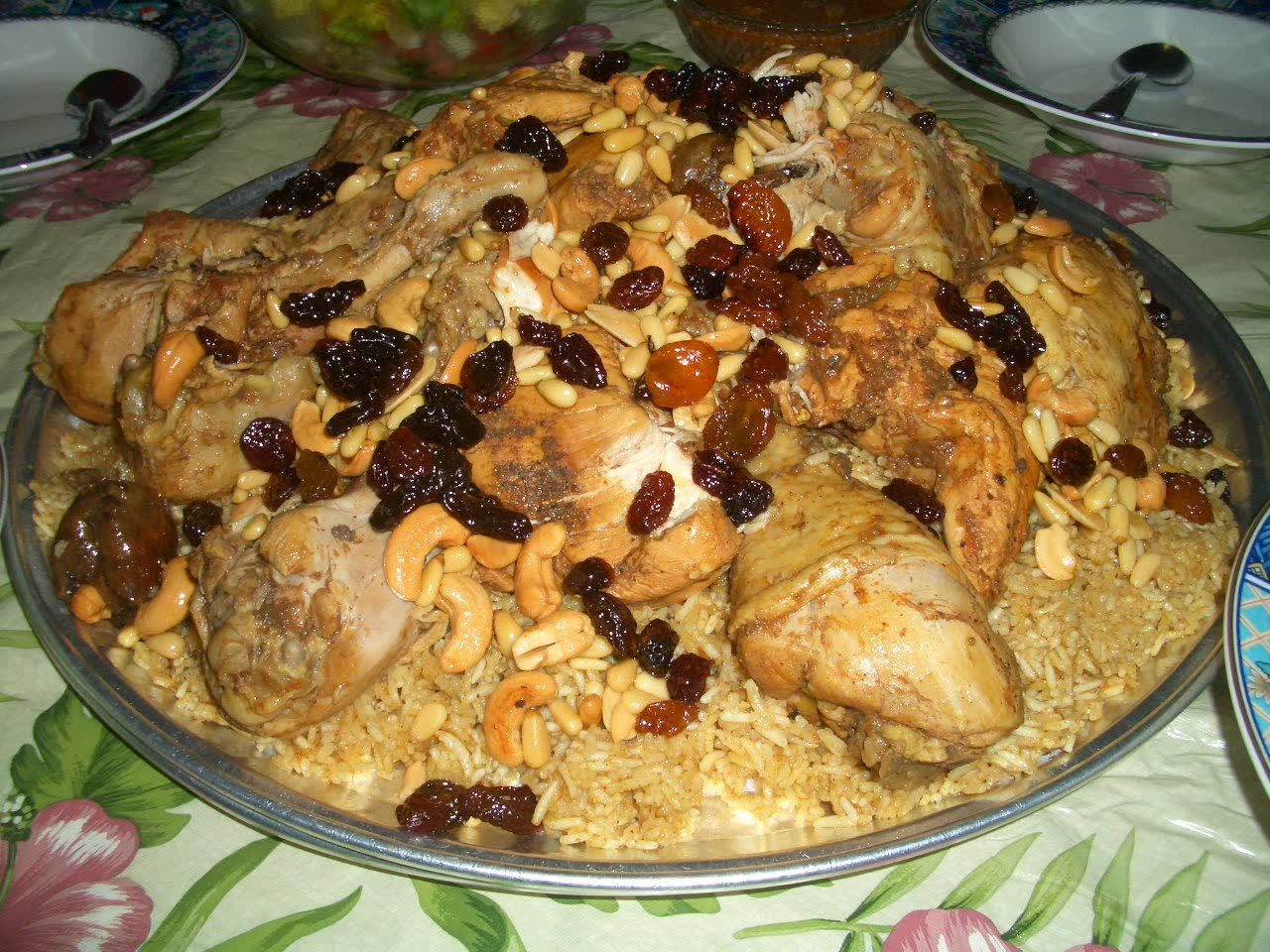
Fluff the rice with a fork and spread it over a large platter. Arrange the lamb on top, scatter over the nuts, raisins and coriander leaves, and serve with the sauce alongside.
Cook’s notes
- For a drier, more Najdi-style rice, keep the stock to the 900 ml given here: the liquid should sit only about 1 cm above the soaked rice. Use boiling water, not cold, if you need to top it up.
- For a Hijazi-leaning kabsa, add two or three extra chopped tomatoes and a handful of chopped fresh herbs to the base, and serve with more of the sauce, to give the dish the tomato-forward, slightly saucier character that one regional guide attributes to Hijazi kabsa.
- To use chicken instead of lamb, cut a whole chicken into pieces and simmer it only until cooked through before straining the stock; chicken needs far less time than lamb.
- For a smoky finish, put a small piece of red-hot charcoal in a foil cup with a little oil on top of the rested rice, cover the pot and leave it for 10 minutes before serving.
Sources & fact-check8
- Nadeem’s Lamb Kabsa (Nadeem Turkia)SBS Food, 14 October 2026
- Kabsa (Lamb, Saudi-style) by Muna KennyMunaty Cooking, 14 October 2026
- Lamb KabsaLurpak Middle East, 14 October 2026
- Modern Saudi Lamb Kabsa (chef Yann Bernard Lejard)FOUR Magazine, 14 July 2016
- Best Kabsa Restaurants in Saudi Arabia by CityHouse of Saud, 25 April 2026
- Same Nation, Different Worlds: Regional Varieties of Saudi CuisineHalaltravelpal, 14 October 2026
- KabsaWikipedia, 14 October 2026
- Kabsa: The Iconic Dish as Prepared in Saudi ArabiaRemitly, 23 May 2026
Every name, number and date in this story was checked against the sources above before publication. Spotted something wrong? Tell us — we correct errors openly. See our editorial standards.