Abu Shukri, Jerusalem: The Craft of Doing a Few Things Well
On Al-Wad Street in the Old City of Jerusalem, a vaulted stone room has built its reputation on warm hummus, fava beans and falafel.
The plate arrives warm. A shallow dish glazed in brown and yellow holds a pool of hummus, with a well of brown fava beans in the middle, a pour of olive oil and a scatter of parsley. Beside it come pita, sliced tomato, onion, pickles and a few round falafel. This is lunch at Abu Shukri, one of the best-known hummus restaurants in the Old City of Jerusalem, and the whole meal fits on one small table.
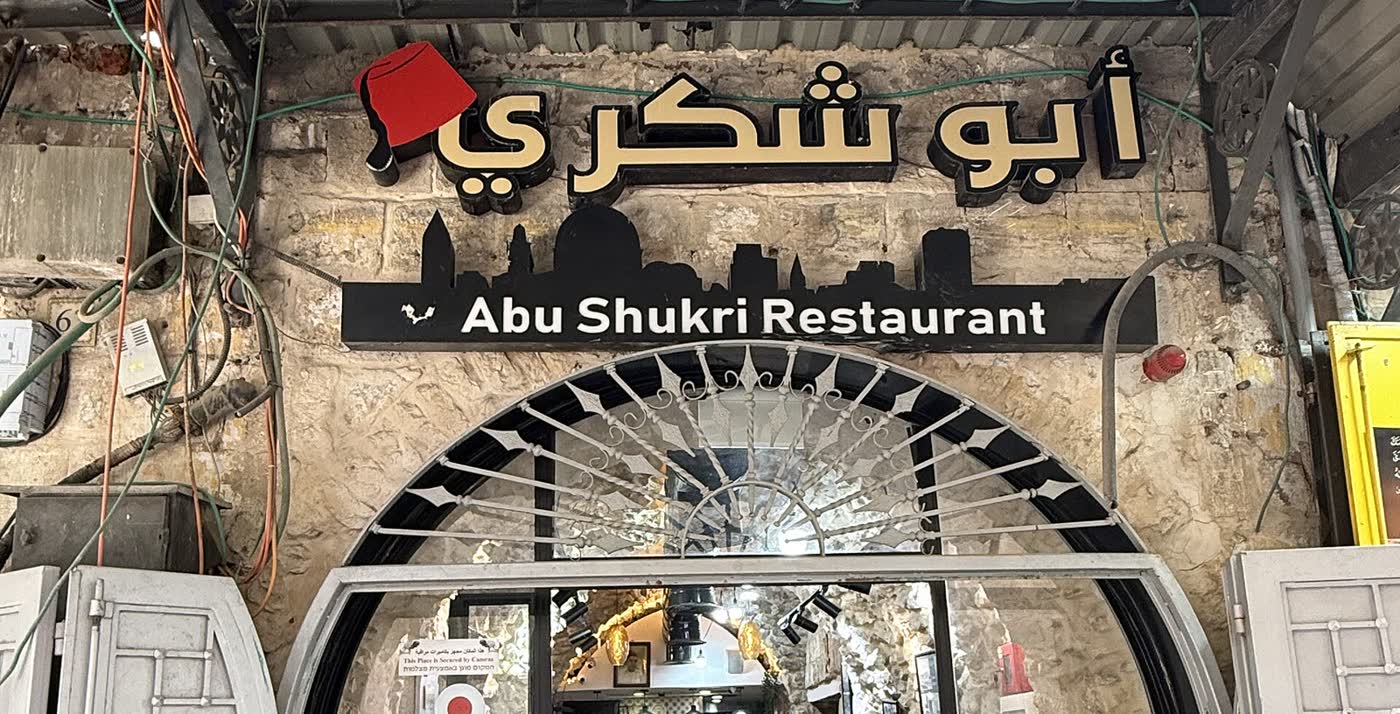
The restaurant stands on Al-Wad Street in the Muslim Quarter, listed by guides at number 63, next to the sixth station of the Via Dolorosa. iTravelJerusalem places it in the heart of the Old City and says it has been serving hummus for more than 70 years. No source consulted gives a founding year, so that rough figure is the safest one. From the street the front is modest: a stone arch, an iron fan of arrows over the doorway, and a black sign with the name in Arabic and English.
A vaulted room and a short list
Inside, the room is a low stone vault, lit by spotlights on a track, with framed black-and-white photographs along the walls and plain wooden tables set close together. The photographer’s description on Wikimedia Commons calls it an ancient building, and the stonework supports that. iTravelJerusalem calls the place busy and crowded almost all day.
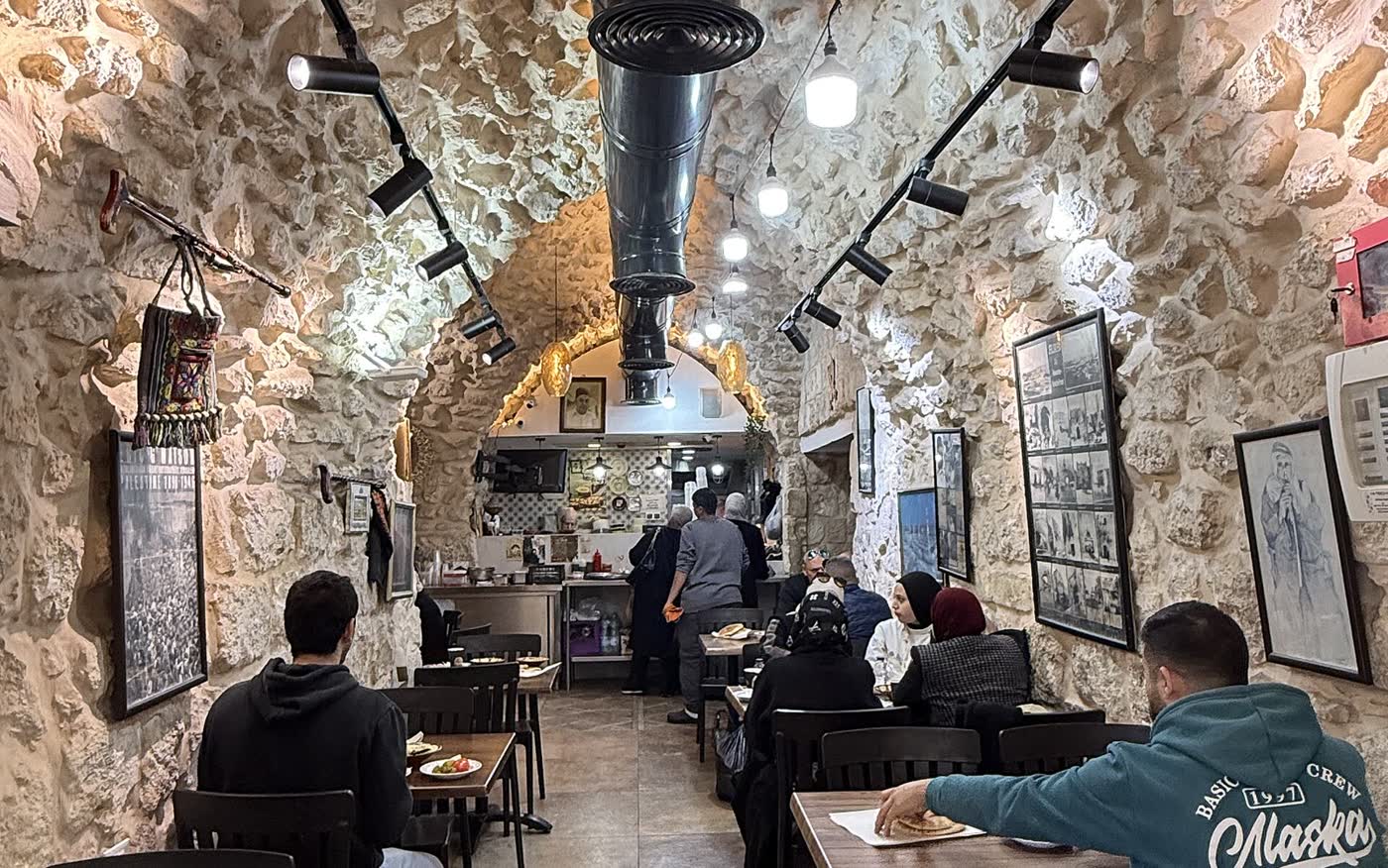
The menu does not wander. Hummus comes first: iTravelJerusalem says it is made fresh daily, served warm, with olive oil and paprika. In the Levant hummus is usually made from cooked chickpeas, tahini, lemon juice and garlic, and eaten warm for breakfast, lunch or dinner. Frommer’s, cited by Tripexpert, says it can be served plain or topped with a dab of fool, the brown beans, or with whole chickpeas or roasted pine nuts. Falafel, which iTravelJerusalem calls excellent, and salads complete the order.
Hummus here is served warm, with olive oil and paprika, and made fresh every day.
Hummus with ful on top
The plate in the photograph below shows a combination with a local name. In Jerusalem and the areas around it, fava beans are often served on top of hummus, a dish known as qudsiyeh. Ful medames, the beans themselves, is cooked fava beans served with olive oil and cumin, and is a staple in Egypt; in parts of the Levant it is served as a dip or as a topping.
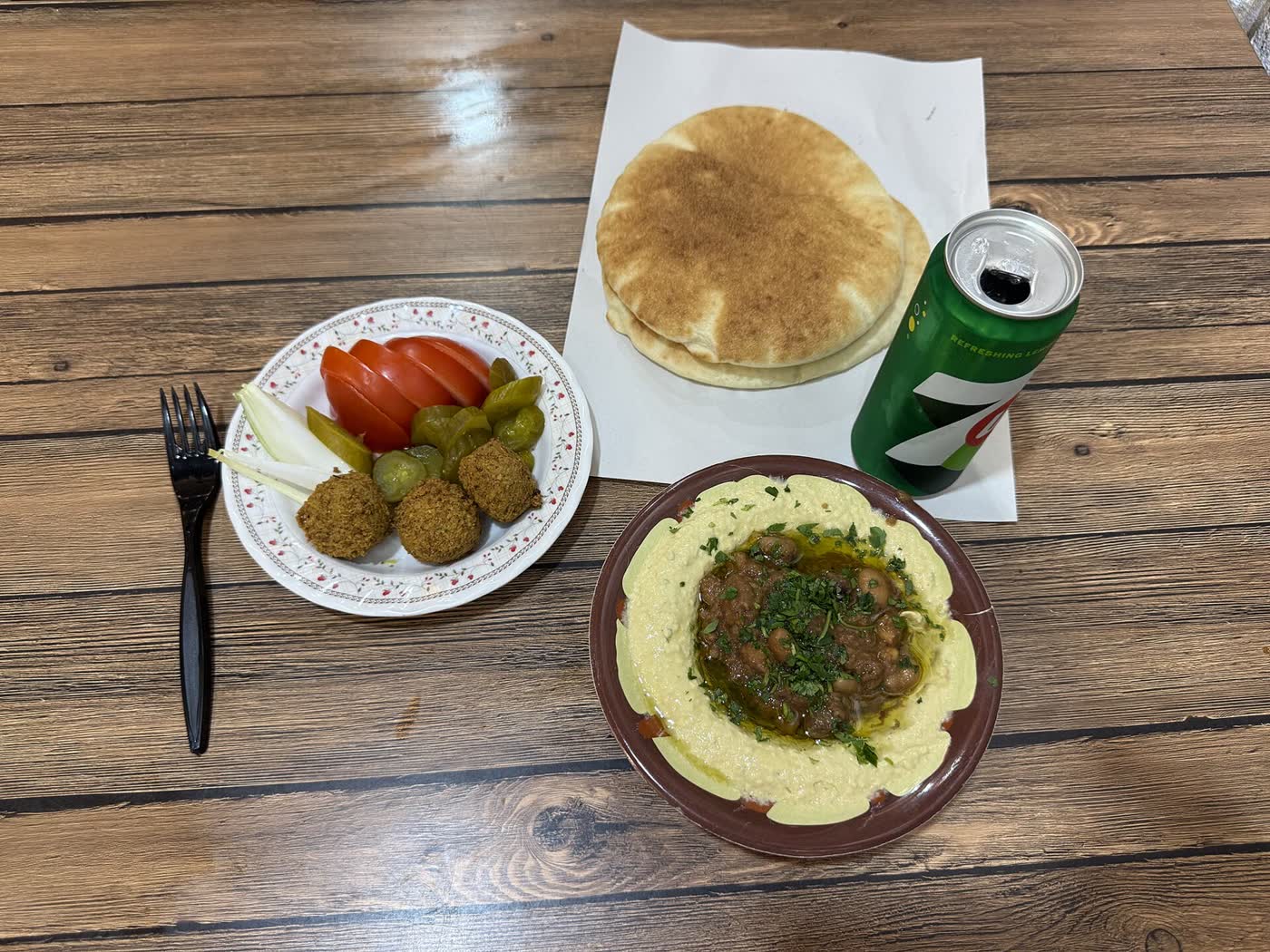
Falafel in the Levant is typically made from chickpeas, though in Egypt it is made from fava beans. Eaten with pickles and sliced onion, it supplies crunch against the soft spread. None of it is complicated. That is the point, and it makes Abu Shukri a fair introduction to everyday food in the Old City.
Two doors, one family name
Visitors should know that more than one Abu Shukri exists in the Old City. A New York Times account, republished by Jordan News in 2023, describes a smaller shop run by Ziyad Abu Shukri, who says it is the original place his father opened more than 80 years ago. There he still grinds hummus by hand with a mortar and pestle and serves it with ful, falafel and pita to a handful of tables. The writer notes that his brothers own the better-known restaurant near the Via Dolorosa, which has been featured widely in travel writing and on television.
The same article is a useful map of the surrounding streets. It points to a tahini mill that grinds sesame with a basalt stone and has operated for about 150 years, and a sweet shop on Al-Wad Street that has been making sweets for more than 50 years. Tahini is what turns chickpeas into hummus, so the ingredients and the dish sit within a few streets of each other.
That proximity is part of what a restaurant like Abu Shukri represents. The cooking is simple and the repertoire short, but it sits among neighbours and suppliers with long histories of their own. For anyone who wants to understand what Arab food heritage means in practice, a plate of warm hummus in a vaulted stone room is a good place to start.
Sources & fact-check8
- Abu ShukriiTravelJerusalem, 14 October 2026
- Hummus, tahini, and other tastes of home in Jerusalem’s Old CityJordan News (reprinting The New York Times), 21 January 2023
- Abu ShukriTripexpert (summarising Frommer’s, National Geographic and DK Eyewitness), 14 October 2026
- Culinary treasures of Jerusalem’s Old CityISRAEL21c, 29 August 2017
- HummusWikipedia, 14 October 2026
- Ful medamesWikipedia, 14 October 2026
- FalafelWikipedia, 14 October 2026
- Abu Shukri, 63 Al-Wad Street (node 4995235125)OpenStreetMap, 14 October 2026
Every name, number and date in this story was checked against the sources above before publication. Spotted something wrong? Tell us — we correct errors openly. See our editorial standards.