Naranj, Damascus: A Table Named for the Bitter Orange
A restaurant in the Old City’s Al-Qaymariya quarter took the Arabic word for the bitter orange as its name, and became a familiar address for Syrian classics served on large platters.
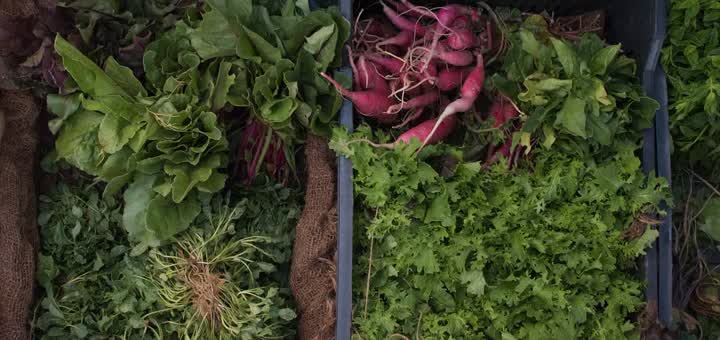
Naranj is a small, bitter orange, in season in winter and once grown in most traditional homes in Damascus and Aleppo. Writing in New Lines Magazine in 2022, Tamara Alrifai described naranj trees as a fixture of Syrian courtyards, and the fruit as the start of a winter ritual: the peel is cut into strips, soaked, simmered in syrup for days, rolled and stored in jars, then served as a sweet with cardamom coffee. The juice, she wrote, makes a good substitute for lemon in salads.
It is the fruit that gives a Damascus restaurant its name. In Your Pocket says Naranj is named after the fragrant bitter-orange trees that are popular in the courtyards of the city, and calls it a classic choice among foreign visitors since 2007. En Primeur Club adds that the word is the Arabic for bitter orange, which it describes as a key ingredient in older Syrian cooking.
Where the street is least straight
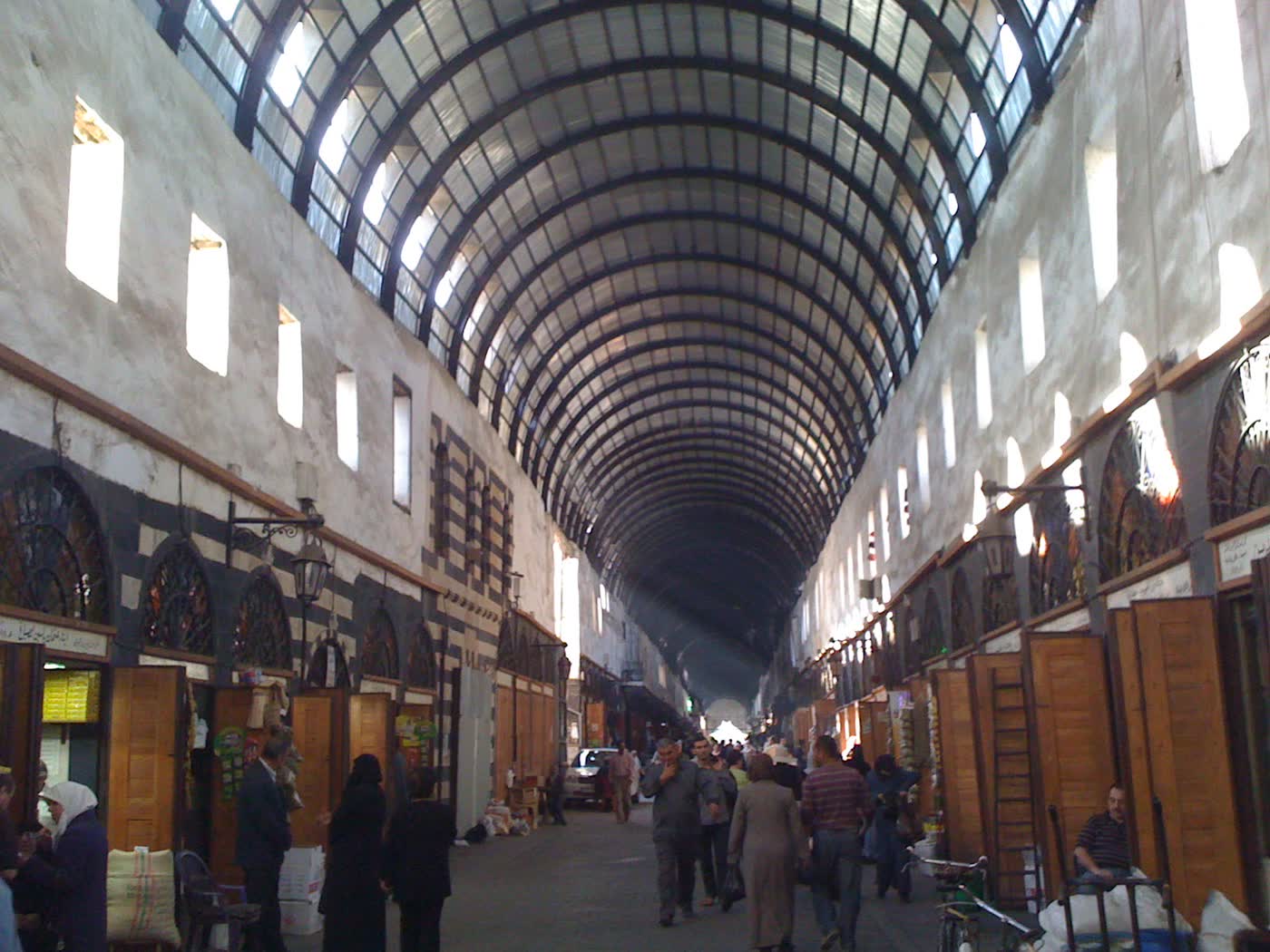
Sources describe the location in different ways. In Your Pocket places Naranj on the Street Called Straight, at the point where that ancient street is least straight. En Primeur Club gives Midhat Basha Street in the Al-Qaymariya quarter of the Old City, and OpenStreetMap maps it in the Al Qamariyyeh neighbourhood. The two descriptions are compatible: Midhat Pasha Souq forms the western section of the Street Called Straight, a Roman-era street that Wikipedia says was named for Midhat Pasha in 1878.
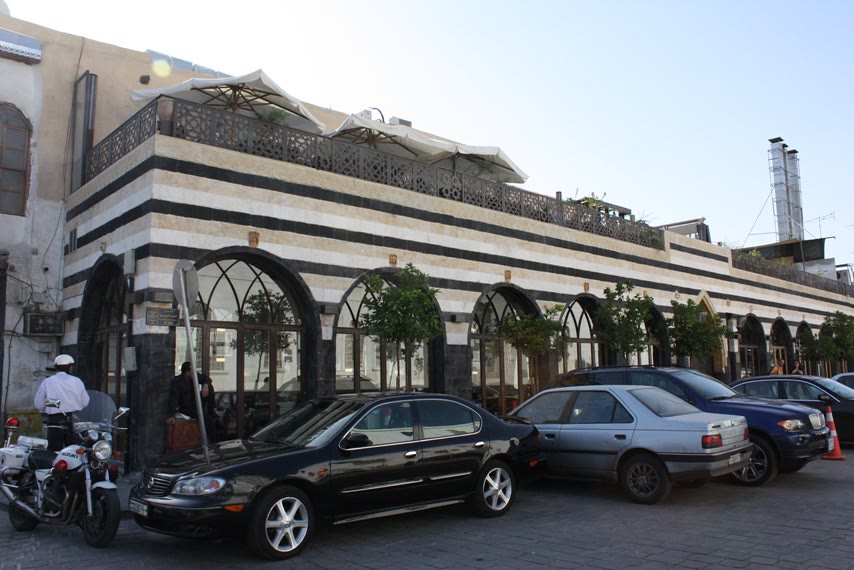
The building itself is described by En Primeur Club as a historic Levantine courtyard house with a hall and an outdoor patio. A photograph taken in May 2010 by a visitor shows a long façade banded in black and white stone, with arched windows and small trees standing between the arches. “We had a seriously splendid lunch here,” the photographer, Jan Smith, wrote on Flickr, adding that it was just across from the Roman Arch.
What is on the platter
In Your Pocket describes the food as large platters of Syrian classics: lamb with bulgur, stuffed vine leaves, sword-skewered kebab and lamb manakish, with complimentary fruit and desserts. NPR’s Ari Shapiro, visiting the restaurant’s branch in Irbil in 2015, listed lamb dumplings in yogurt sauce and a bowl of lentils with frizzled onions, pomegranate seeds and a green herb paste, topped with pieces of dough that are both boiled and fried. Hummus and tabbouleh were also on the menu. The report said nearly all the ingredients came from Syria, including the wheat and the olive oil.
The name points to a fruit, and the fruit points to a courtyard.
That Irbil branch is part of Naranj’s story. According to NPR, it served Syrians who had left their country, and the company then had six locations around the Middle East. The same report said that the original restaurant in the old city of Damascus was still open.
A name with a long history
The word itself has travelled. Alrifai links naranj to the Spanish naranjas and describes courtyard houses with citrus trees in Andalusia, built under the Umayyads, when Damascus was the Umayyad capital. Whatever the exact route, the fruit and the courtyard belong together in Damascene domestic life, as Alrifai describes it, and a restaurant named for the fruit borrows that picture of home.
Anyone considering a trip should treat this story as background rather than a recommendation. The 2015 NPR report is the most recent source found that describes the original restaurant as operating. En Primeur Club lists Naranj with a review date of 28 September 2026 but does not say whether it is open, and no report from 2025 or 2026 was found. Readers should check its current status through its own channels before relying on any of the details above.
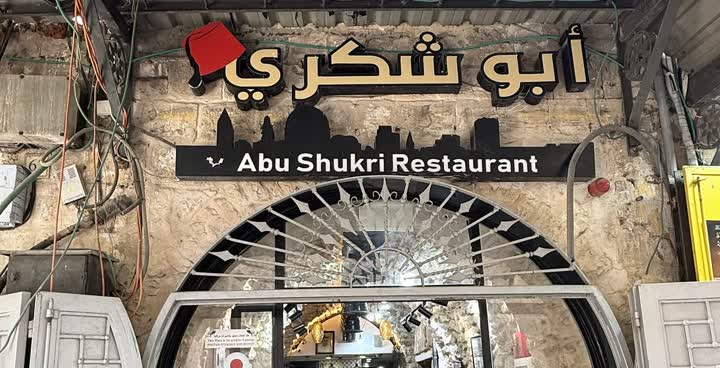
For the wider series, Naranj is a useful counterpart to Tawlet in Beirut, where village cooks bring their own household dishes to one table, and to Abu Shukri in Jerusalem, where a very short menu does the work.
Sources & fact-check7
- Naranj, DamascusIn Your Pocket, 14 October 2026
- Naranj Restaurant, Al-QaimarryehEn Primeur Club, 28 September 2026
- Lamb Dumplings, Lentils And A Bittersweet Taste Of HomeNPR (via GBH), 22 February 2015
- Syrian Kitchens Come to Life in the WinterNew Lines Magazine, 11 March 2022
- Midhat Pasha SouqWikipedia, 14 October 2026
- Naranj, Al Qamariyyeh, Damascus (node 354566143)OpenStreetMap, 14 October 2026
- Naranj Restaurant, Straight Street, Old DamascusFlickr (Jan Smith), 29 June 2010
Every name, number and date in this story was checked against the sources above before publication. Spotted something wrong? Tell us — we correct errors openly. See our editorial standards.